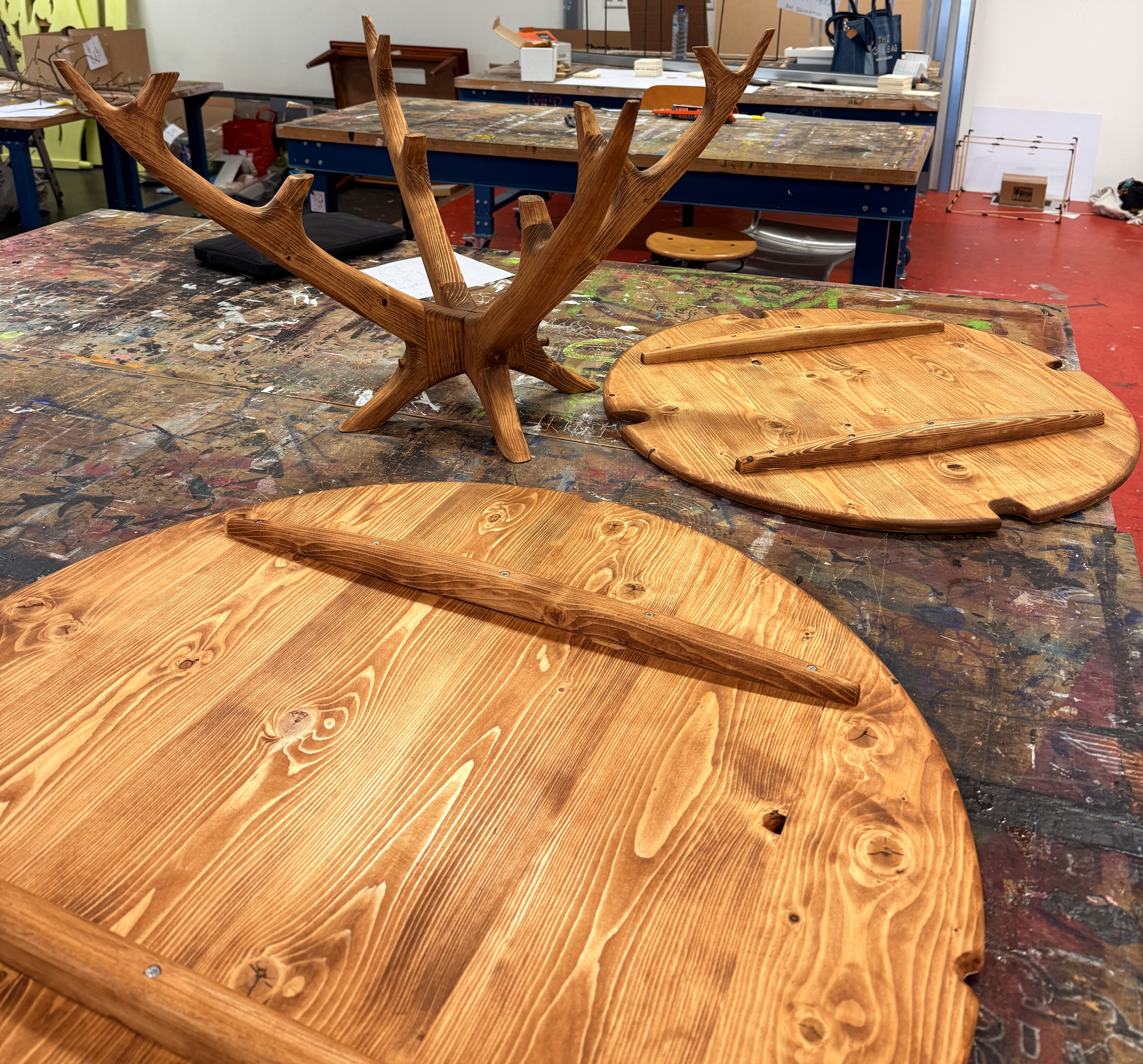
If in the future 3D printing is used as a common manufacturing technique in mass production, what results would that have in the aesthetics of furniture? This table tries to answer that question, while making use of current day woodworking techniques.
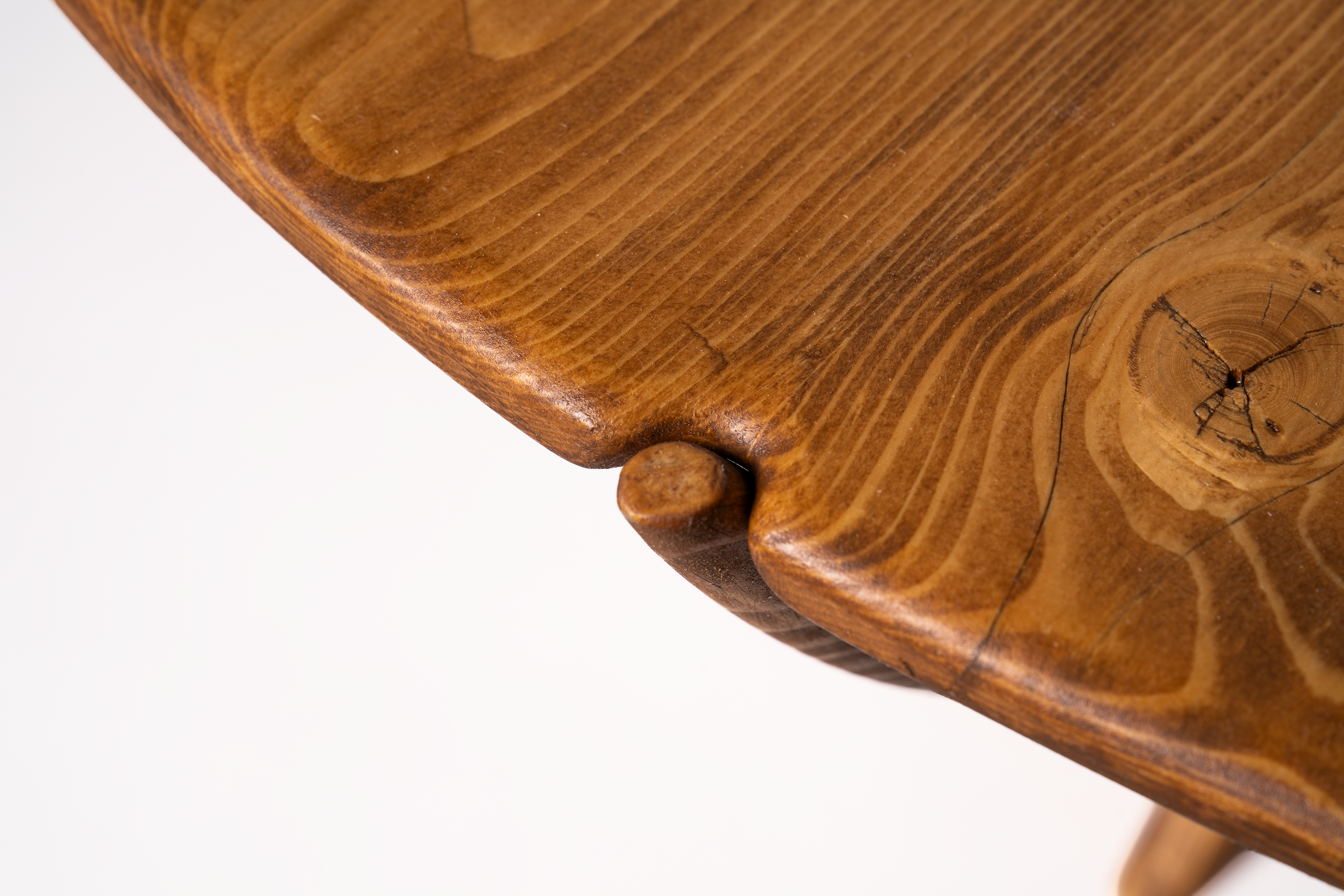
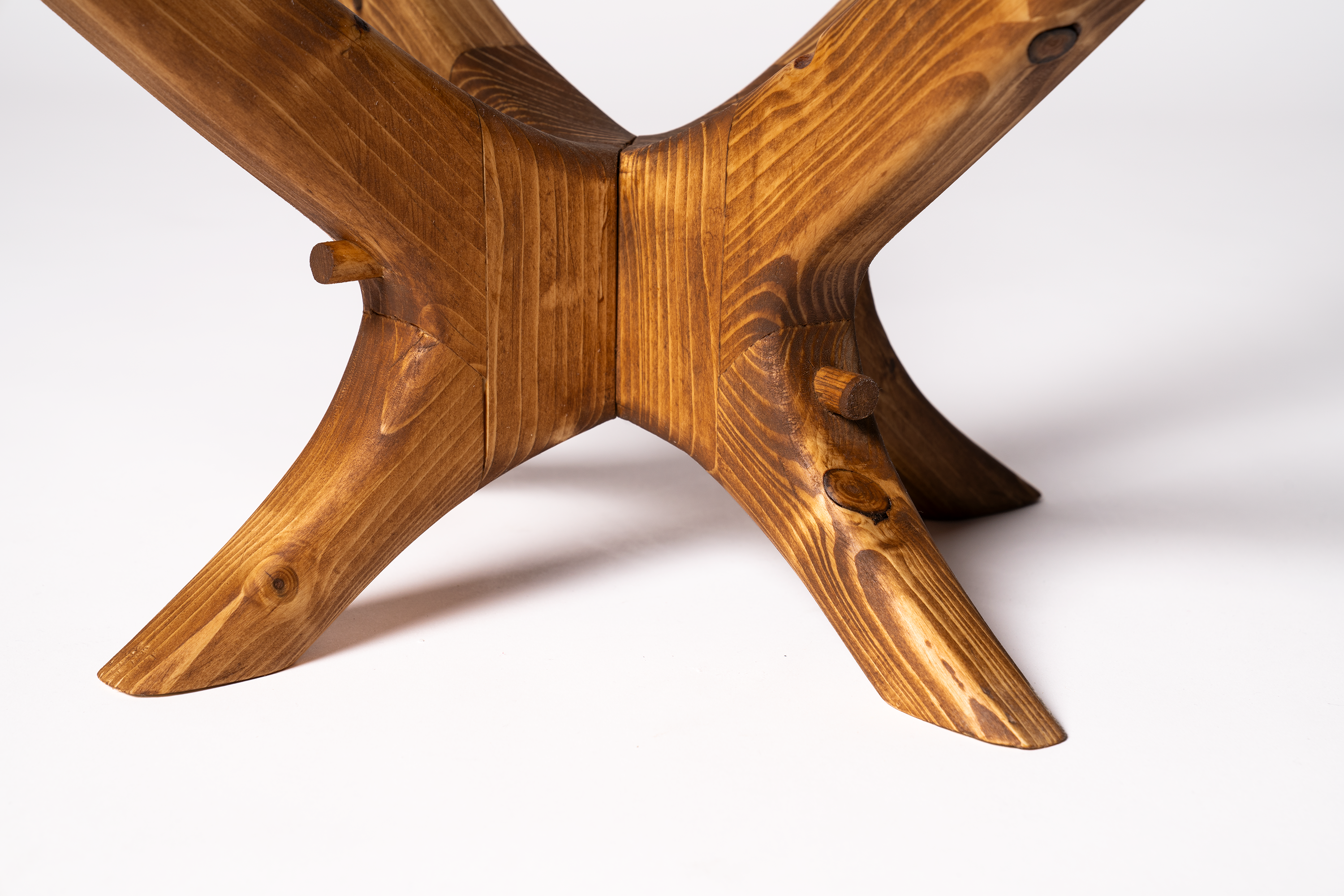
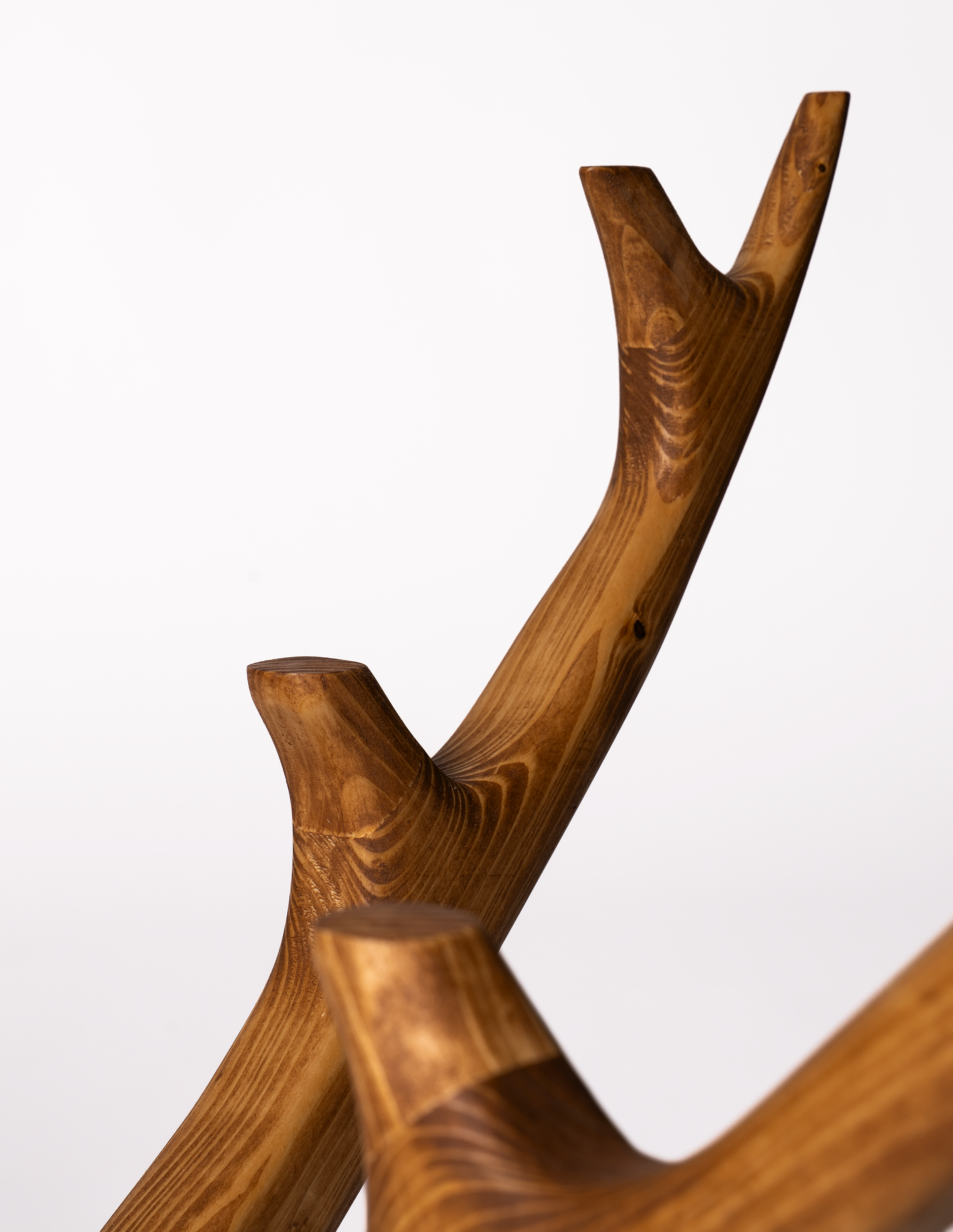
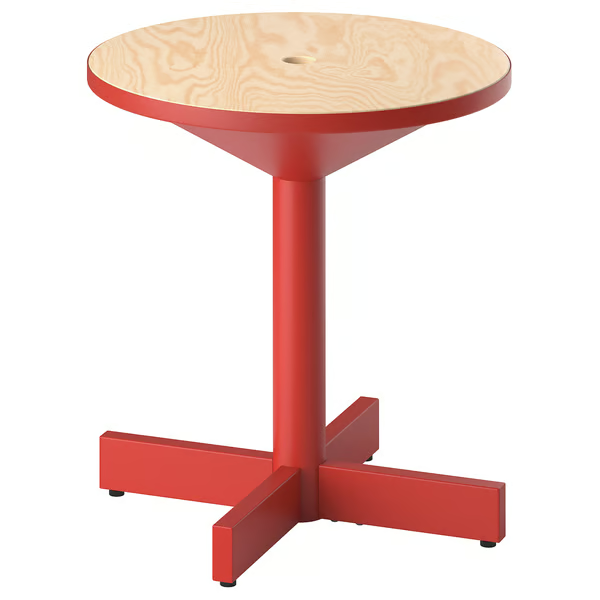
My first finished furniture piece. This table started as a redesign of IKEA’s GRIMSARBO side table. My design answers the question: ‘How would IKEA produce its furniture in 2050?’ I think 3D printing will be used on a larger scale in 2050, and we probably use more sustainable filament, wood pulp based, for example. However, as a technique like this is currently unavailable to me, I decided to design a table inspired by 3D printing, for which i made use of organic shapes and tree-like supports. As the original table has a storage component - which I think is not very easy to access - I decided to create an open storage component in my design: a second table top.As this was my first full scale wooden furniture piece, the making of this table taught me that wood working requires a lot of patience. Hours upon hours were spent sanding the table completely smooth. And as a result, the table to me became a Dear Table (and the table legs might resemble deer antlers).
I started making this table for a school assignment. I was told to create something that can be sold by IKEA in 2050. In order to answer this brief, I needed to look at either of three aspecets of design innovations: social, technical or ecological. By designing a table made for 3D printing woodpulp (even though I made it out of regular solid wood), I passed the assignment.IKEA's GRIMSARBO. Source: IKEAI really like working with wood. I think it is a beautiful material, and there are endless possibilities in designing wooden furniture. So, this school project was a great excuse to exercise my wood working skills. By the time I made this table, I had been working on some other wooden projects, but I had not yet made anything organically shaped. So, I was eager to start this project.I drew the shape of the legs of the table on a piece of MDF, which I cut out with the band saw and sanded smooth. I could then copy this shape on my actual legs with the copying router.After I got the silhouette of the legs right, I needed to create a taper, as the widest part of the leg is the point where the four legs connect, and the bottom and top are narrower. I did this by sanding with the disk sander. I then rounded the edges of the wider parts with a hand router. The narrow parts, I had to file down by hand. I then drilled holes on the connecting areas for dowels. After that, I spent many hours sanding the legs completely smooth. I milled out the shape of the table tops with a Shaper handheld CNC, which I then filed and sanded to my liking. For decreasing bending of the table tops, I made stabiliser bars, for which I unfortunately needed to use screws.
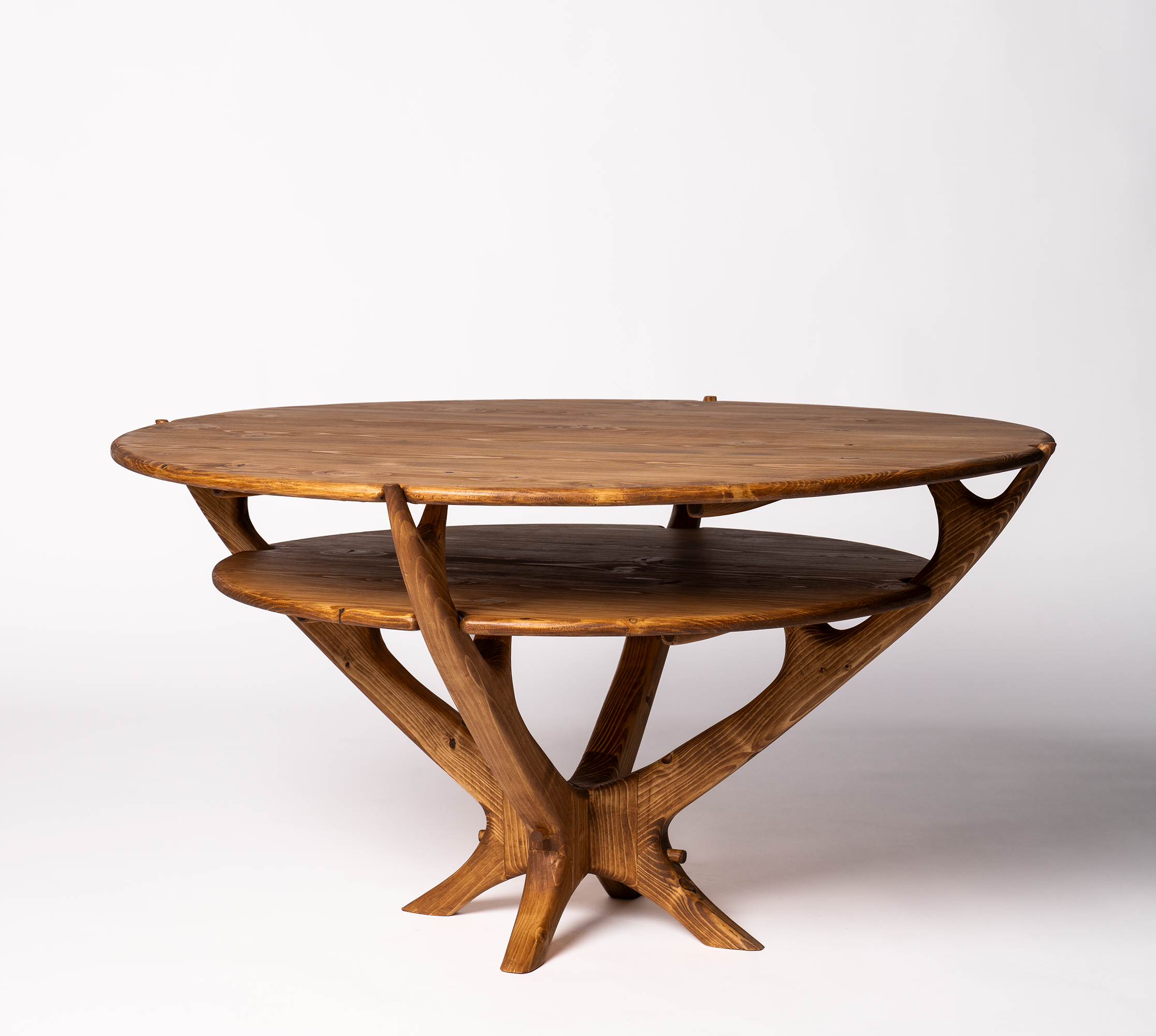 My first finished furniture piece. This table started as a redesign of IKEA’s GRIMSARBO side table. My design answers the question: ‘How would IKEA produce its furniture in 2050?’ I think 3D printing will be used on a larger scale in 2050, and we probably use more sustainable filament, wood pulp based, for example.
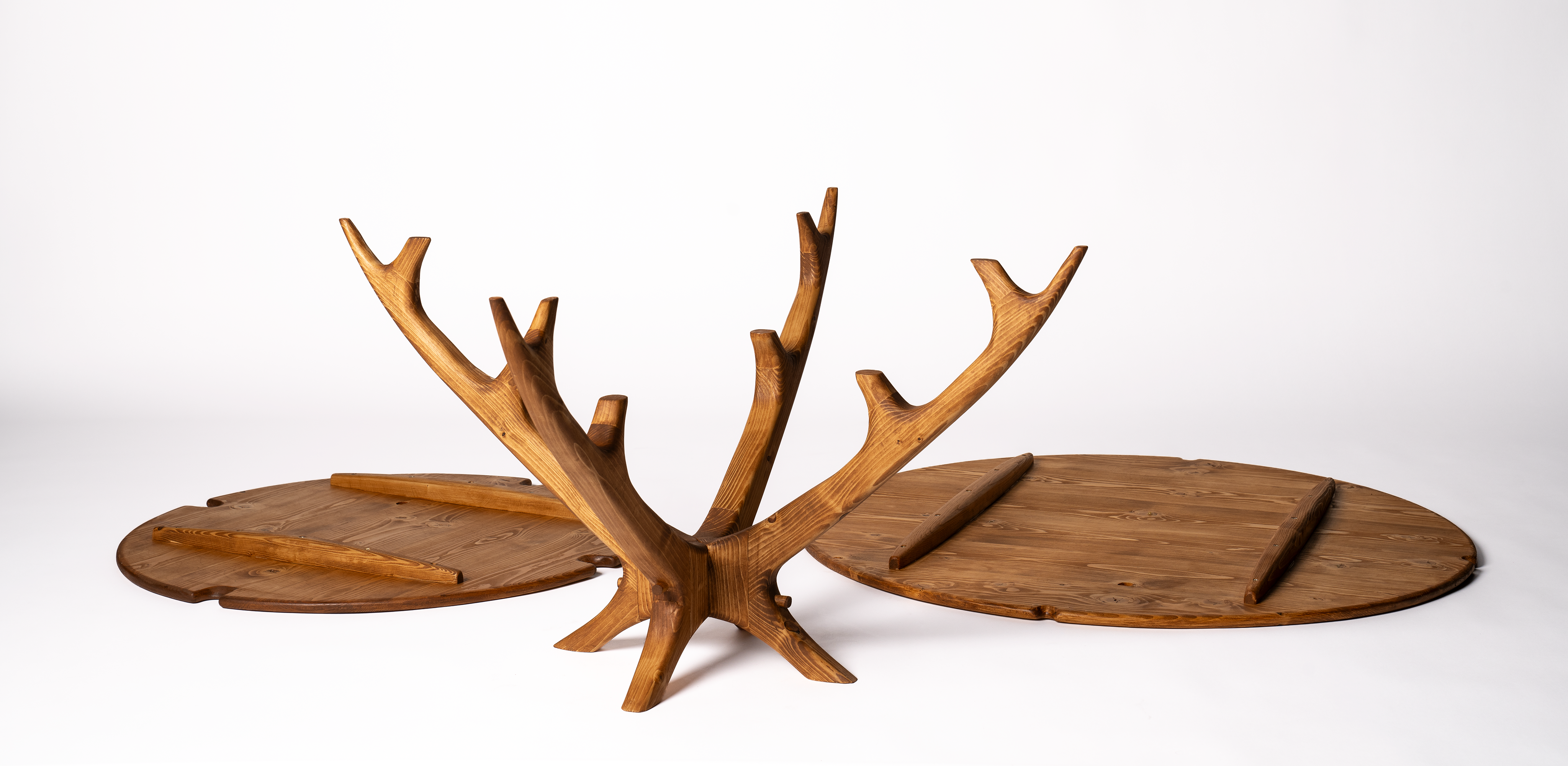
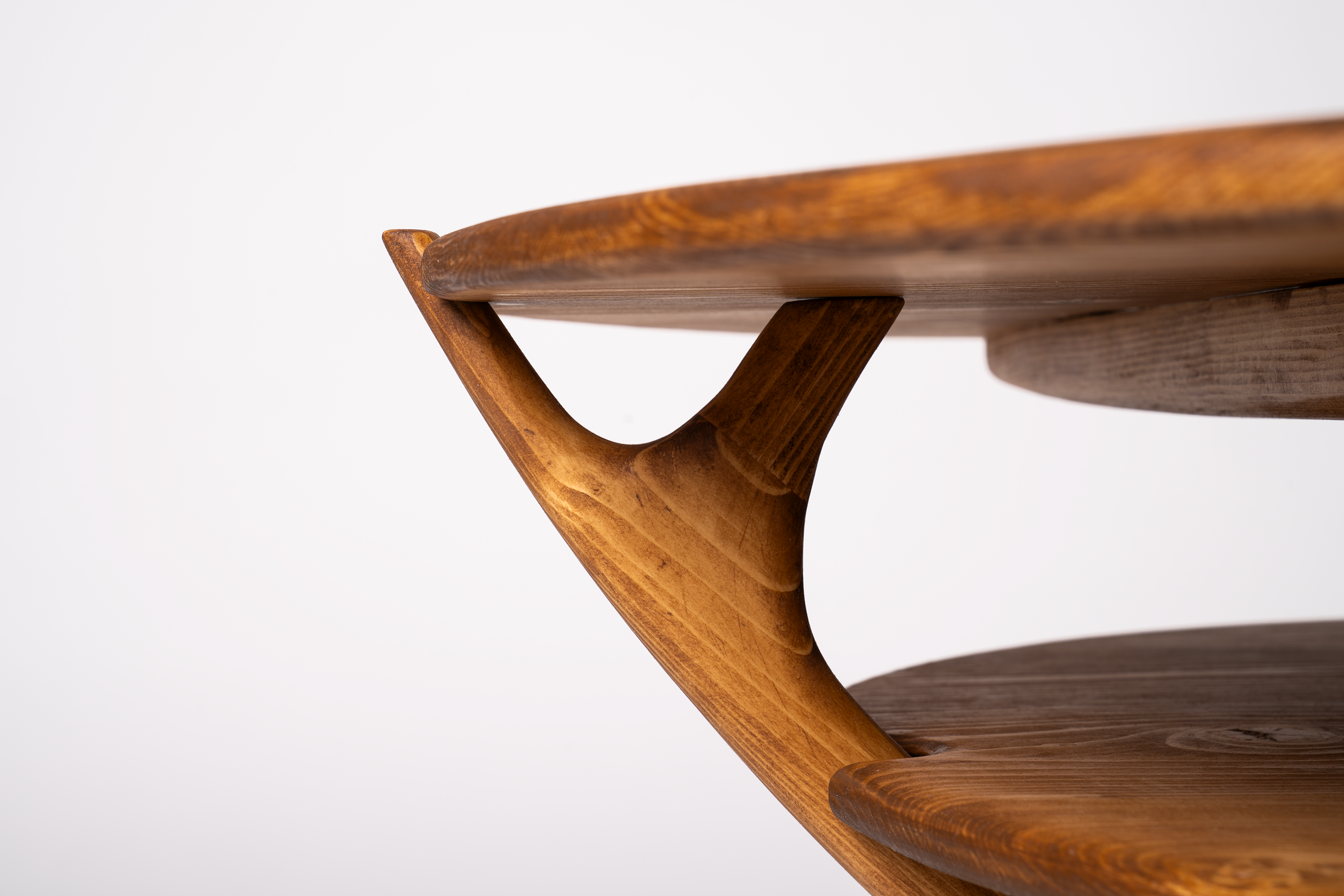 As this was my first full scale wooden furniture piece, the making of this table taught me that wood working requires a lot of patience. Hours upon hours were spent sanding the table completely smooth. And as a result, the table to me became a Dear Table (and the table legs might resemble deer antlers).
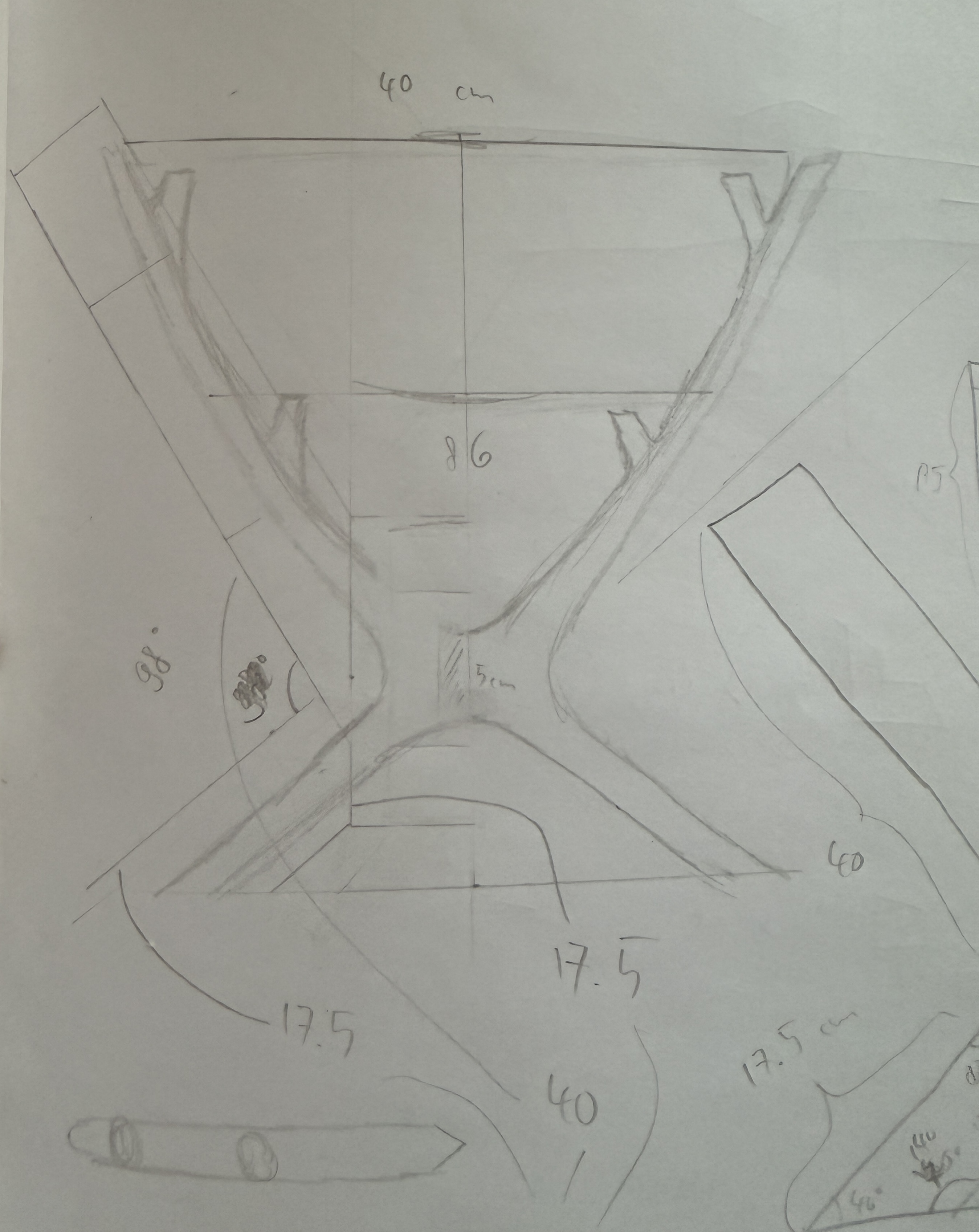 I really like working with wood. I think it is a beautiful material, and there are endless possibilities in designing wooden furniture. So, this school project was a great excuse to exercise my wood working skills. By the time I made this table, I had been working on some other wooden projects, but I had not yet made anything organically shaped. So, I was eager to start this project.
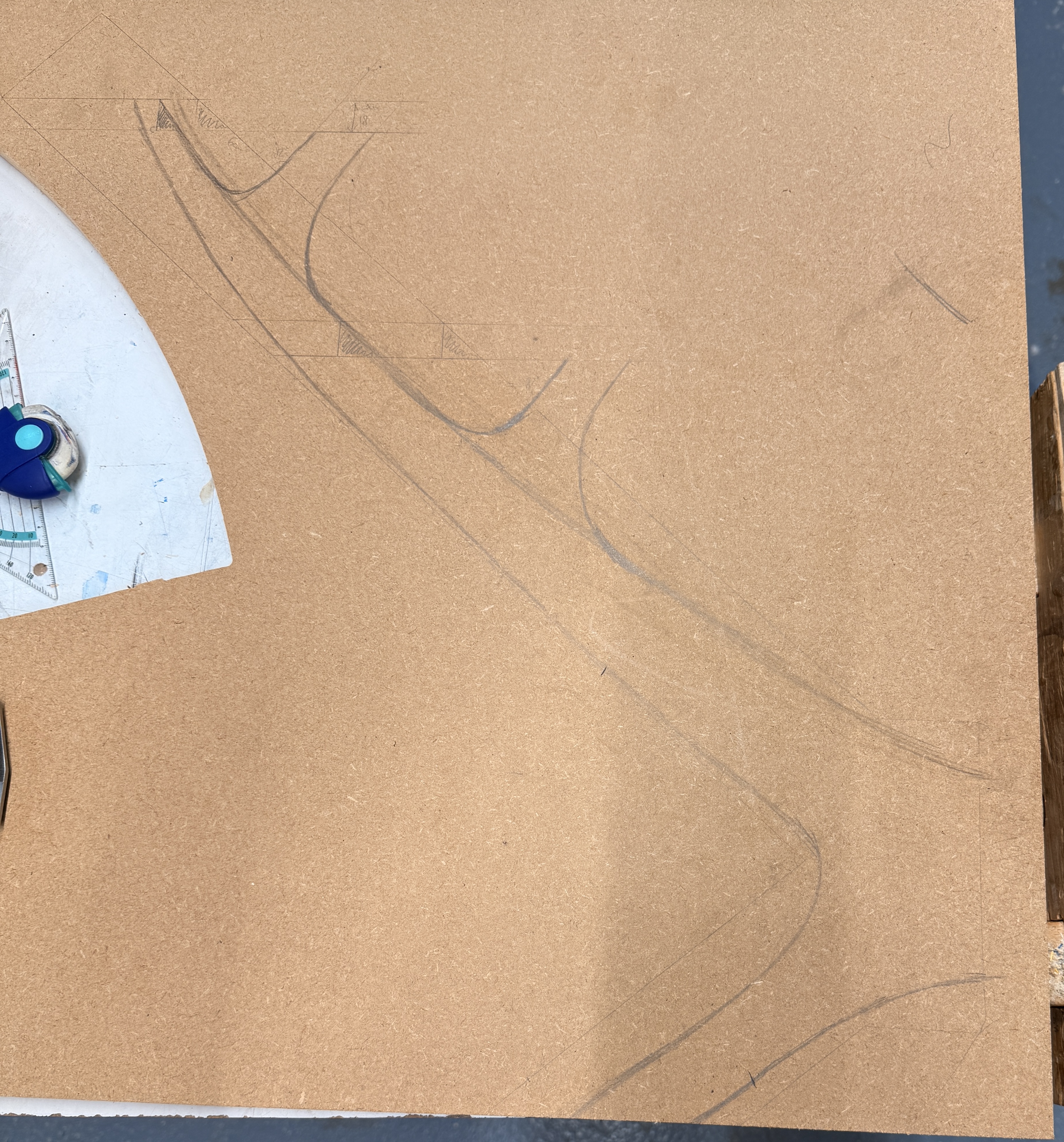 I drew the shape of the legs of the table on a piece of MDF, which I cut out with the band saw and sanded smooth. I could then copy this shape on my actual legs with the copying router.
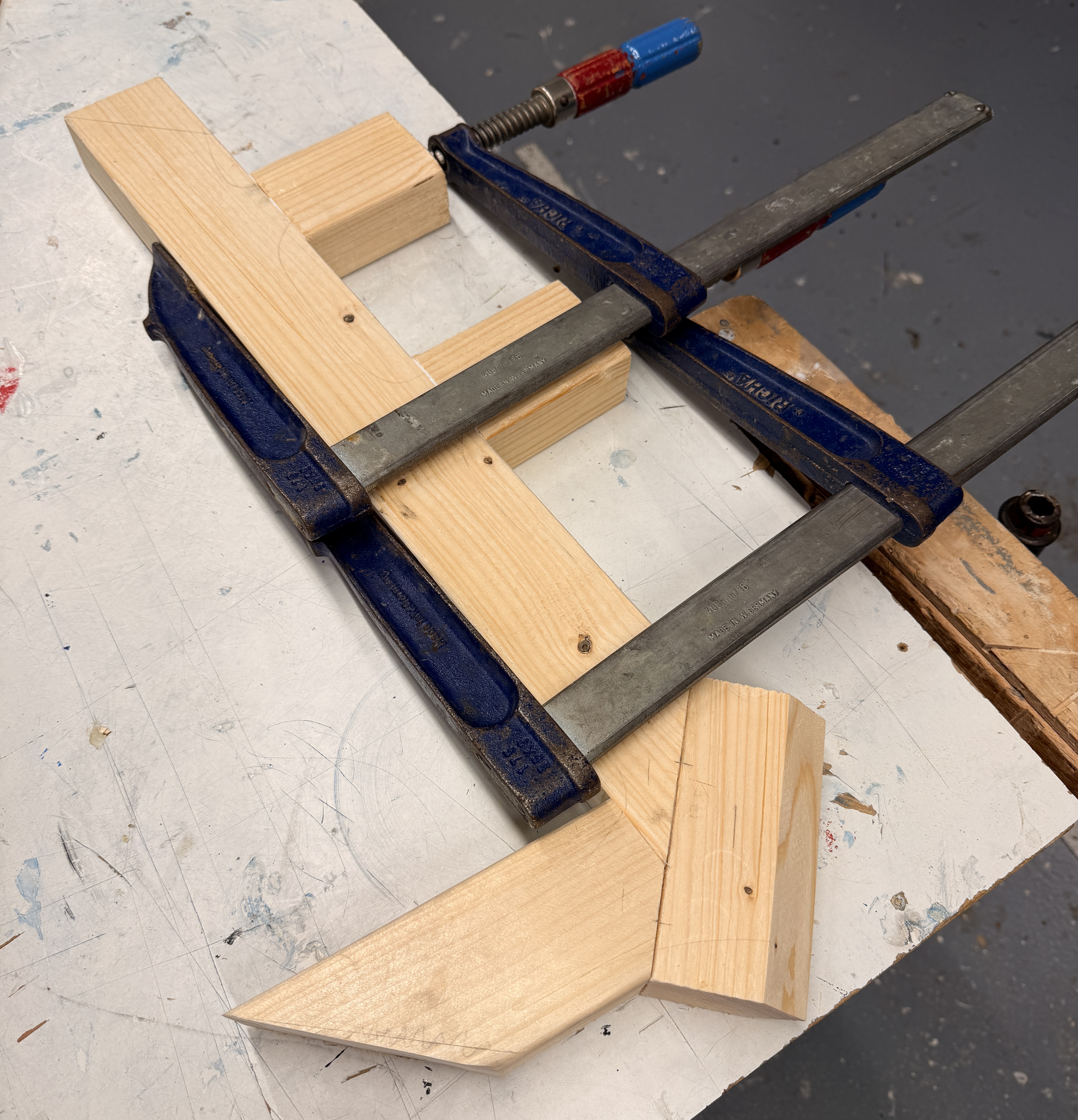
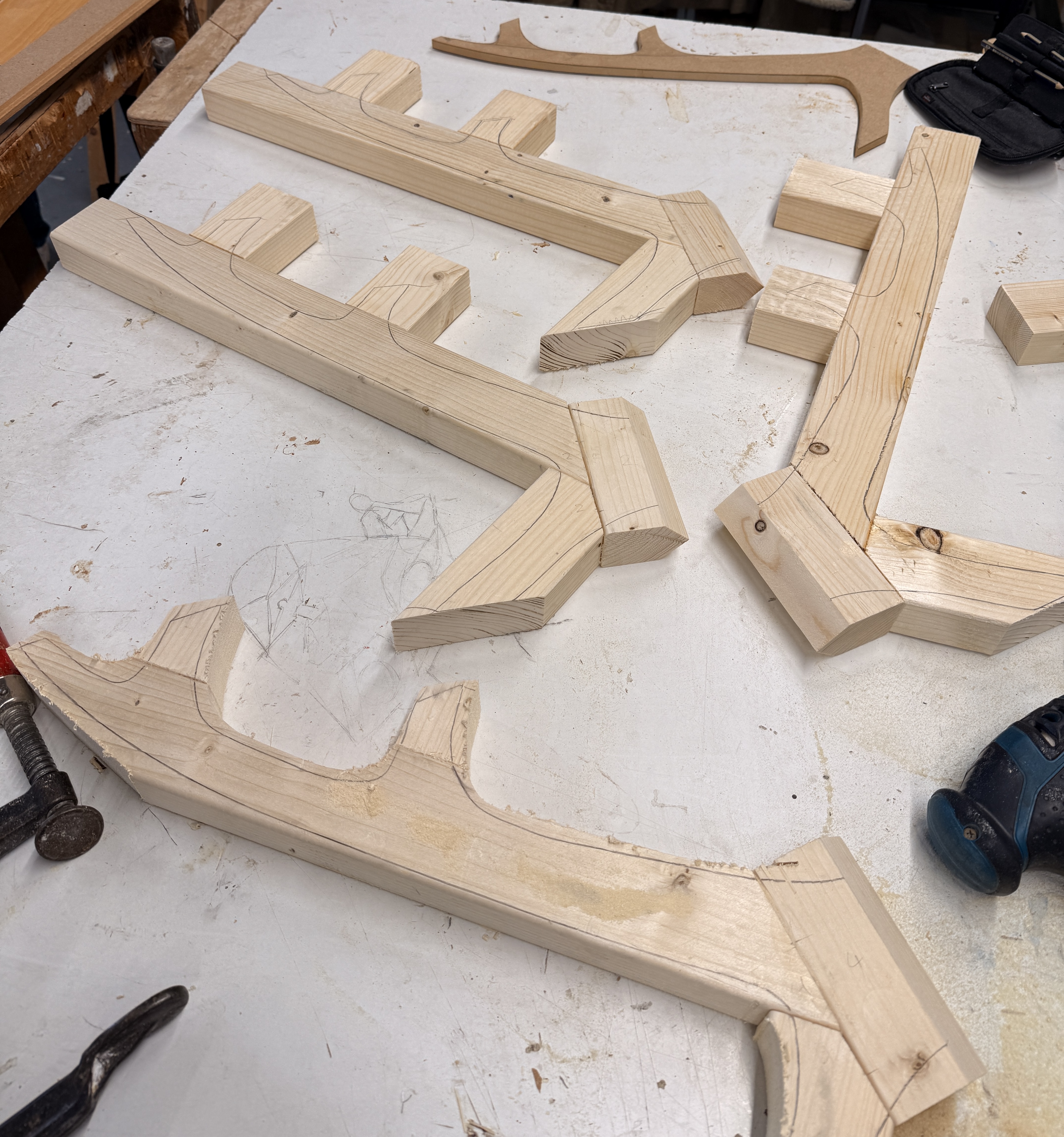
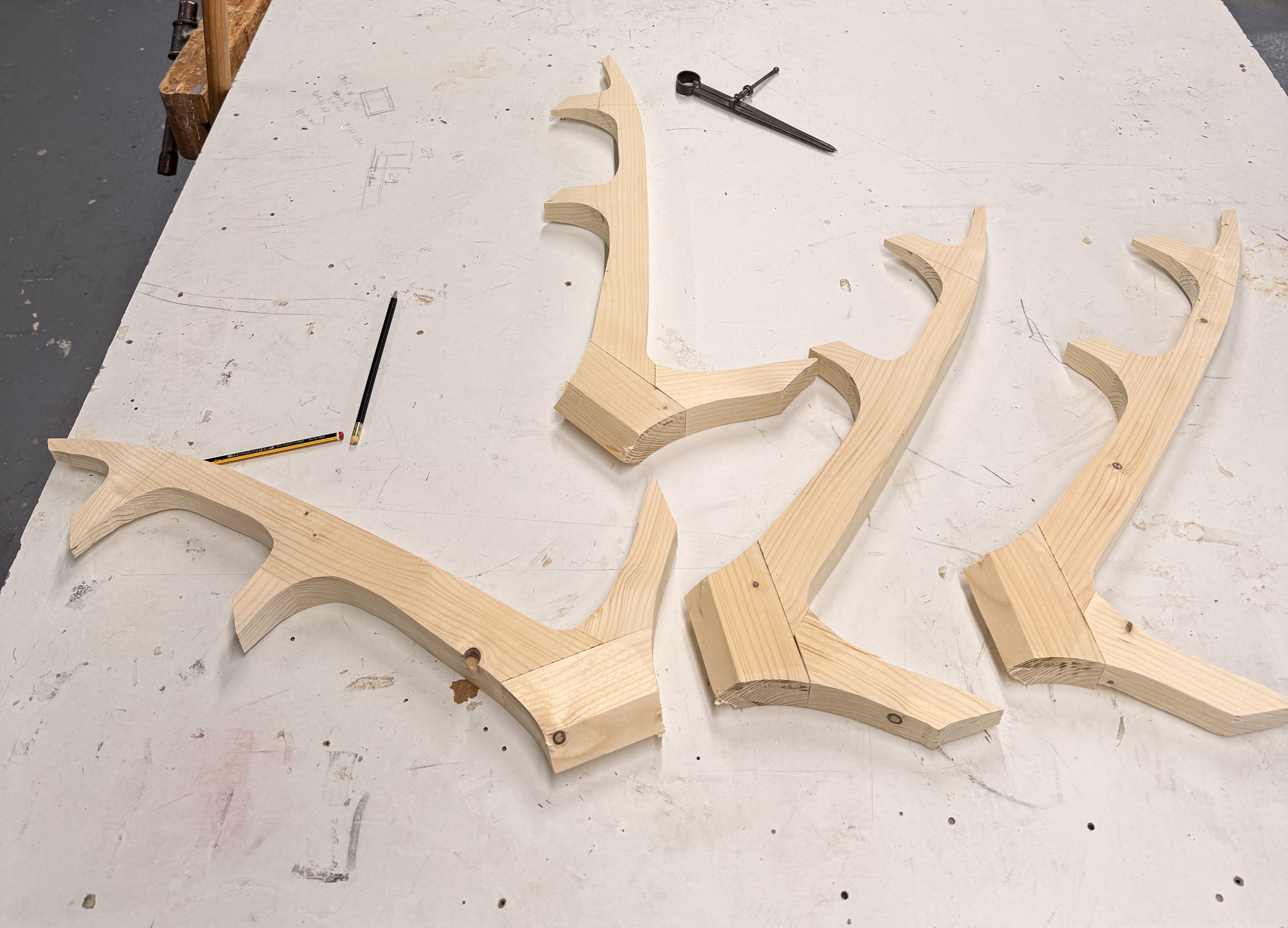
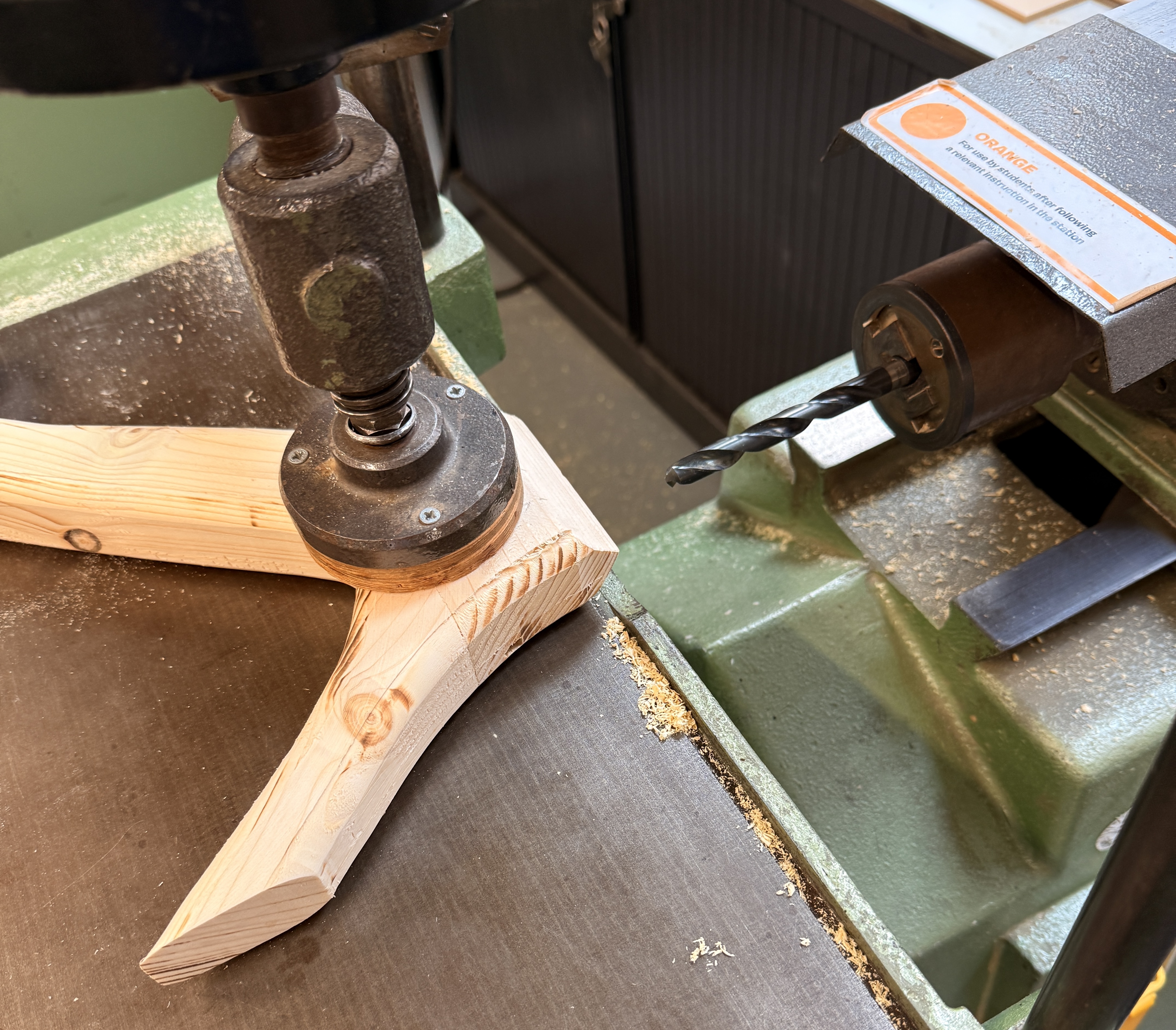
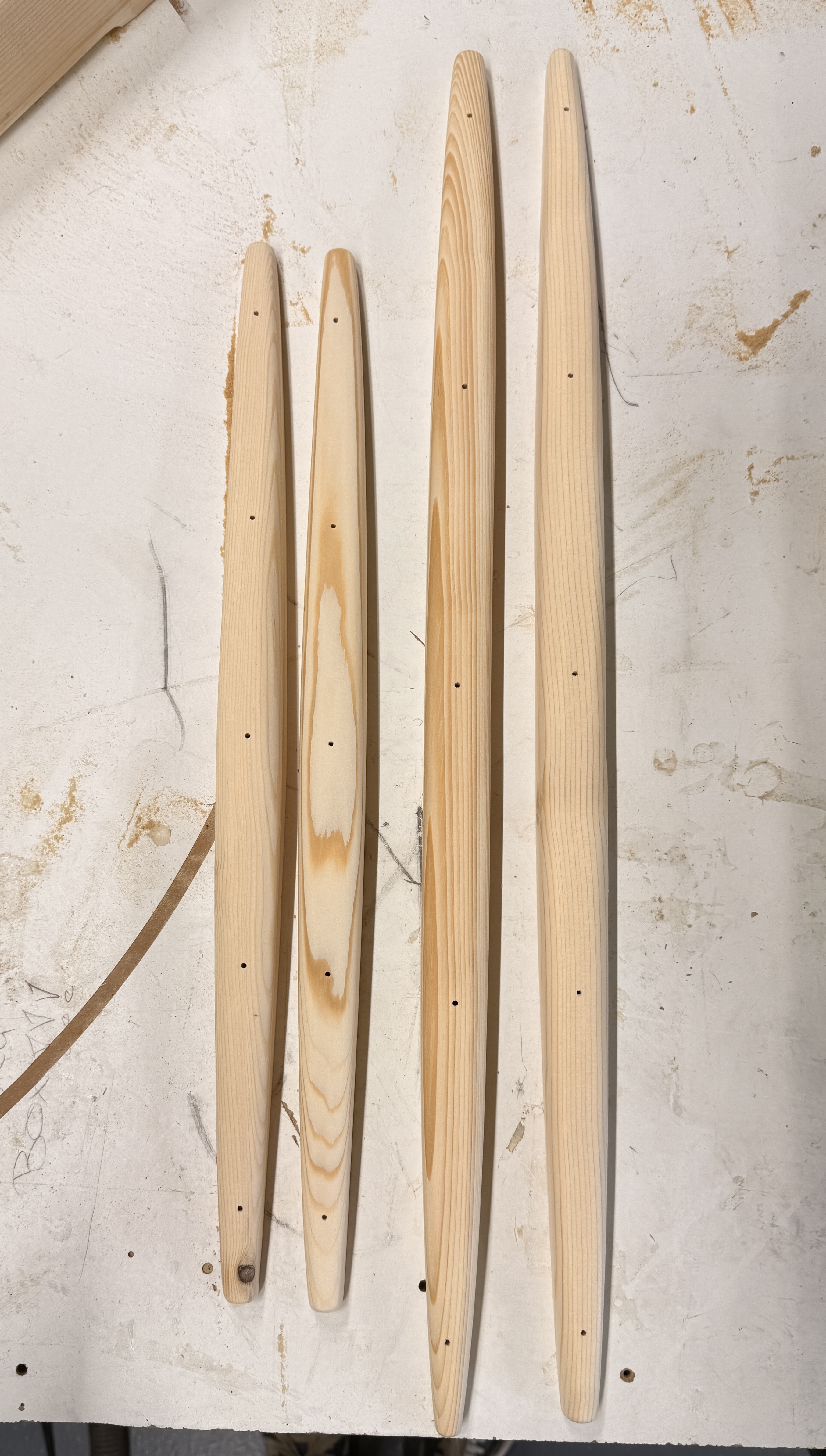
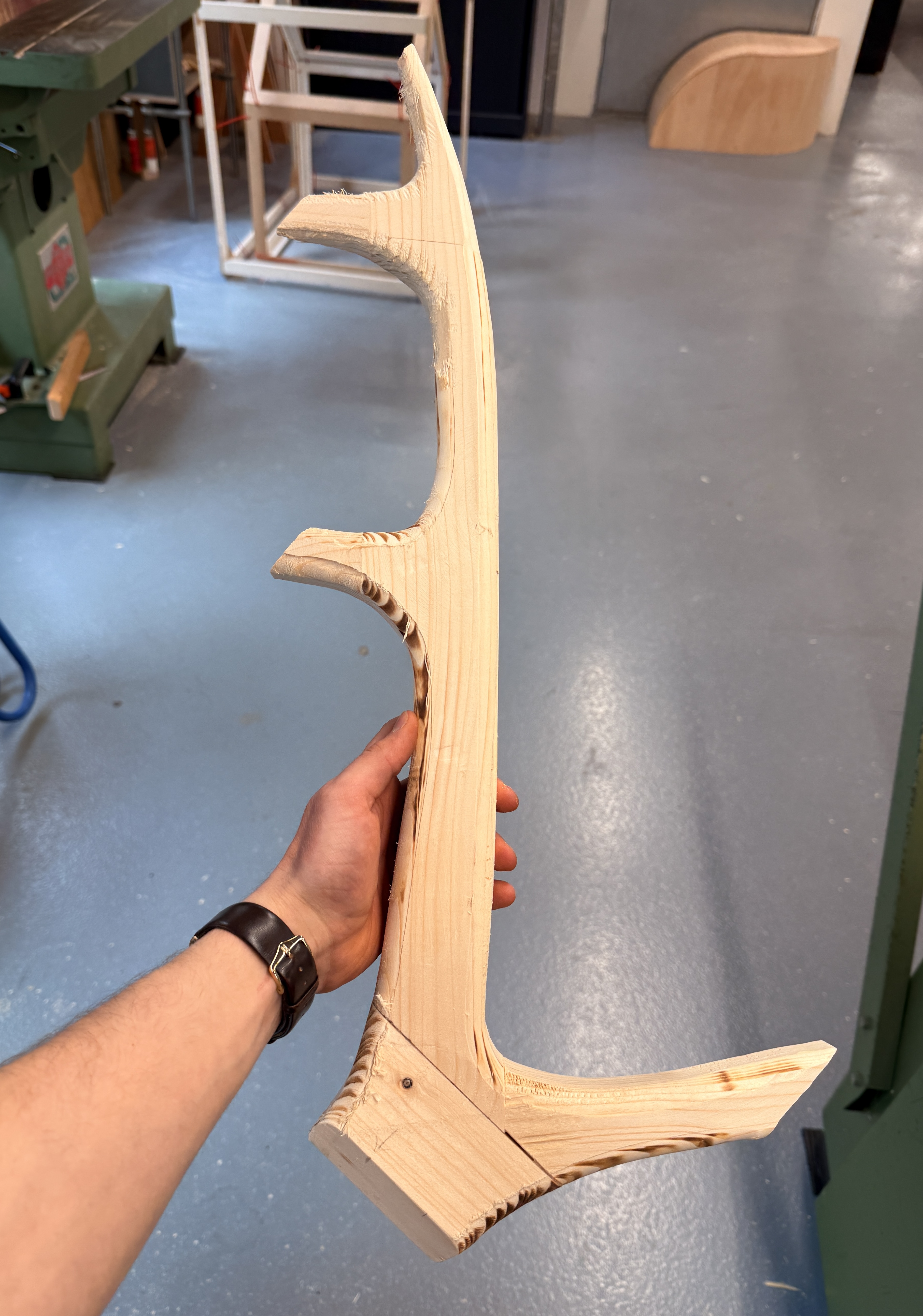 After I got the silhouette of the legs right, I needed to create a taper, as the widest part of the leg is the point where the four legs connect, and the bottom and top are narrower. I did this by sanding with the disk sander. I then rounded the edges of the wider parts with a hand router. The narrow parts, I had to file down by hand. I then drilled holes on the connecting areas for dowels. After that, I spent many hours sanding the legs completely smooth.
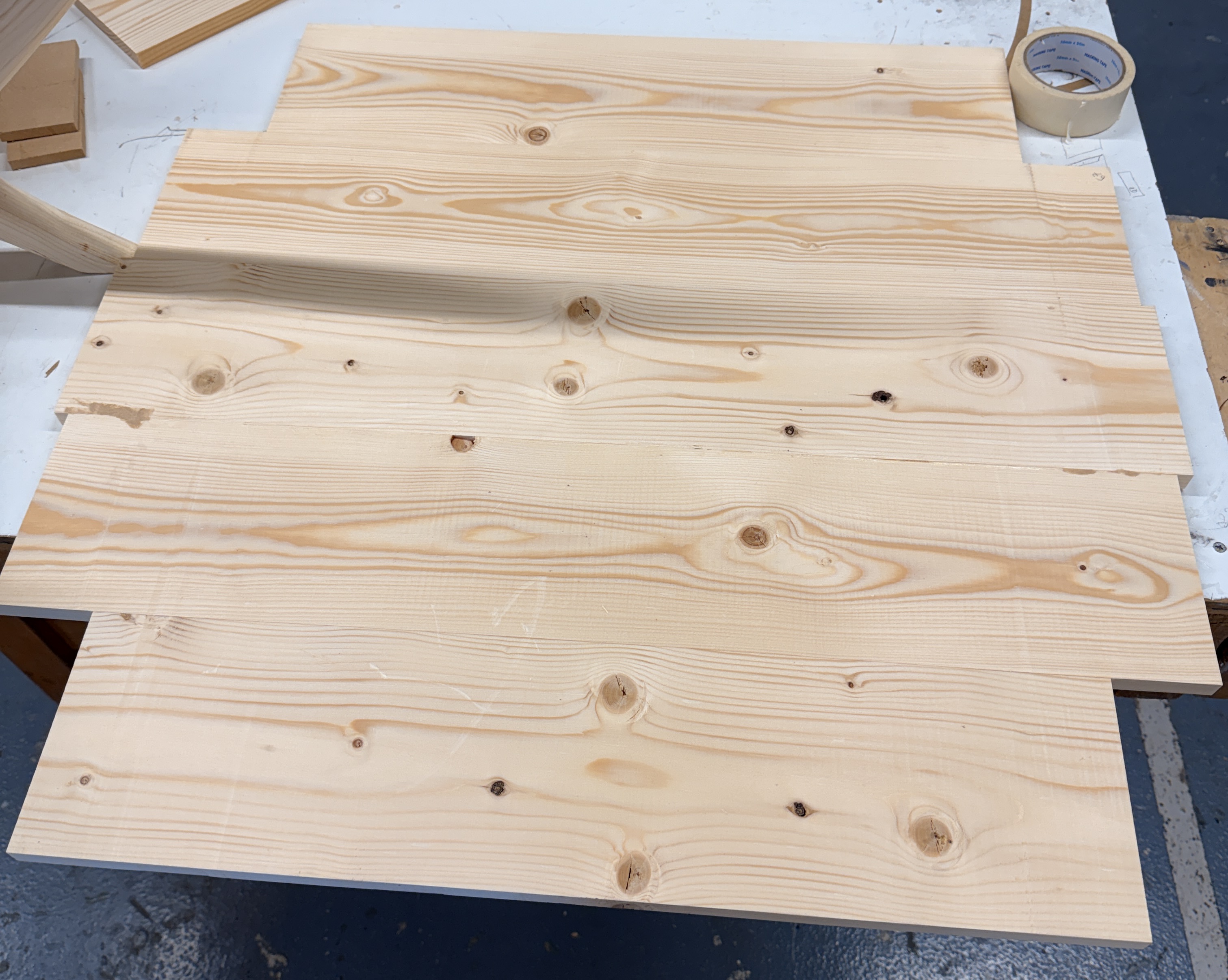
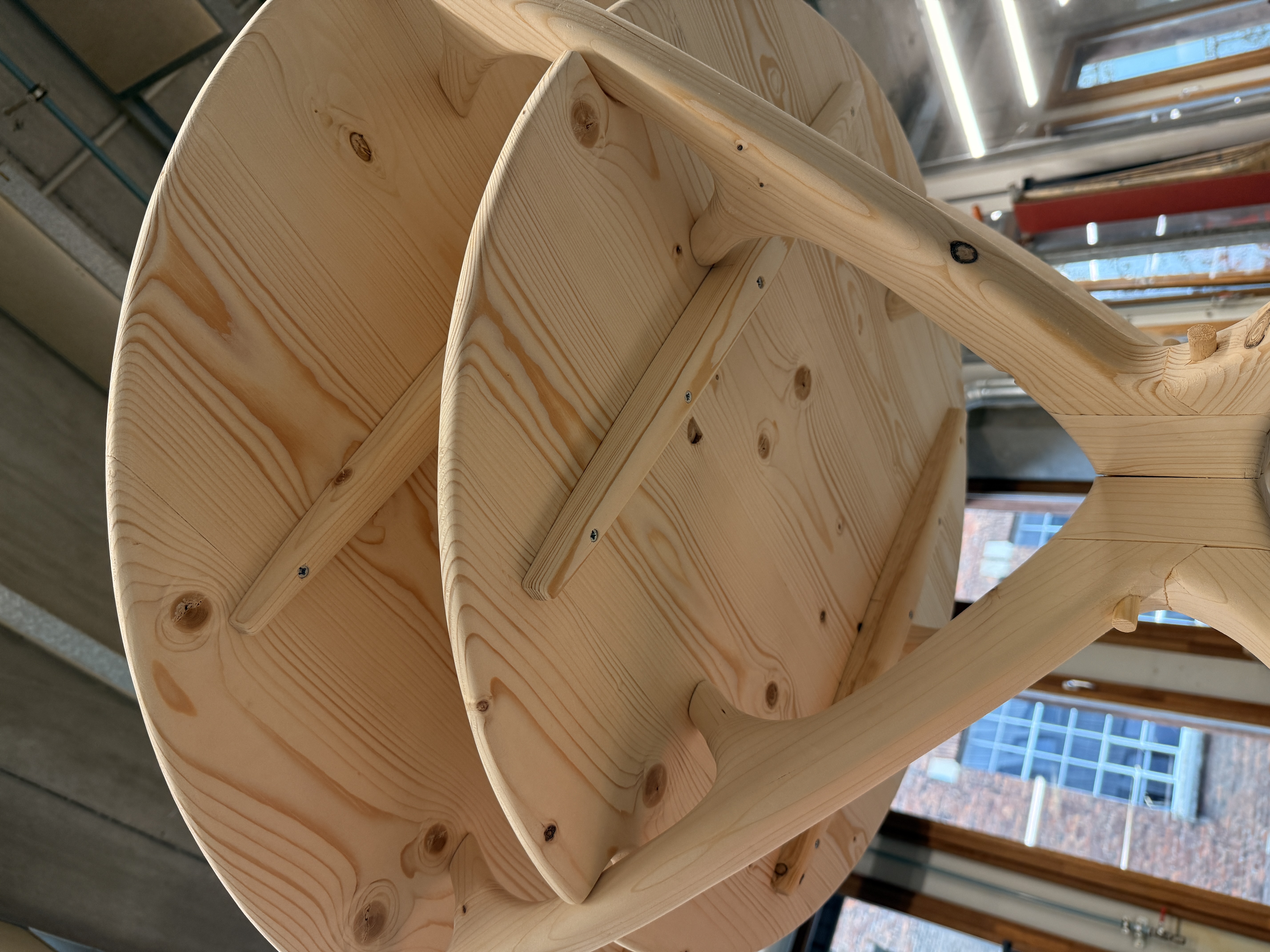 I milled out the shape of the table tops with a Shaper handheld CNC, which I then filed and sanded to my liking. For decreasing bending of the table tops, I made stabiliser bars, for which I unfortunately needed to use screws.