Connecting the Dots
Product
Arm chair
Year
2026
Material
Steel and beech
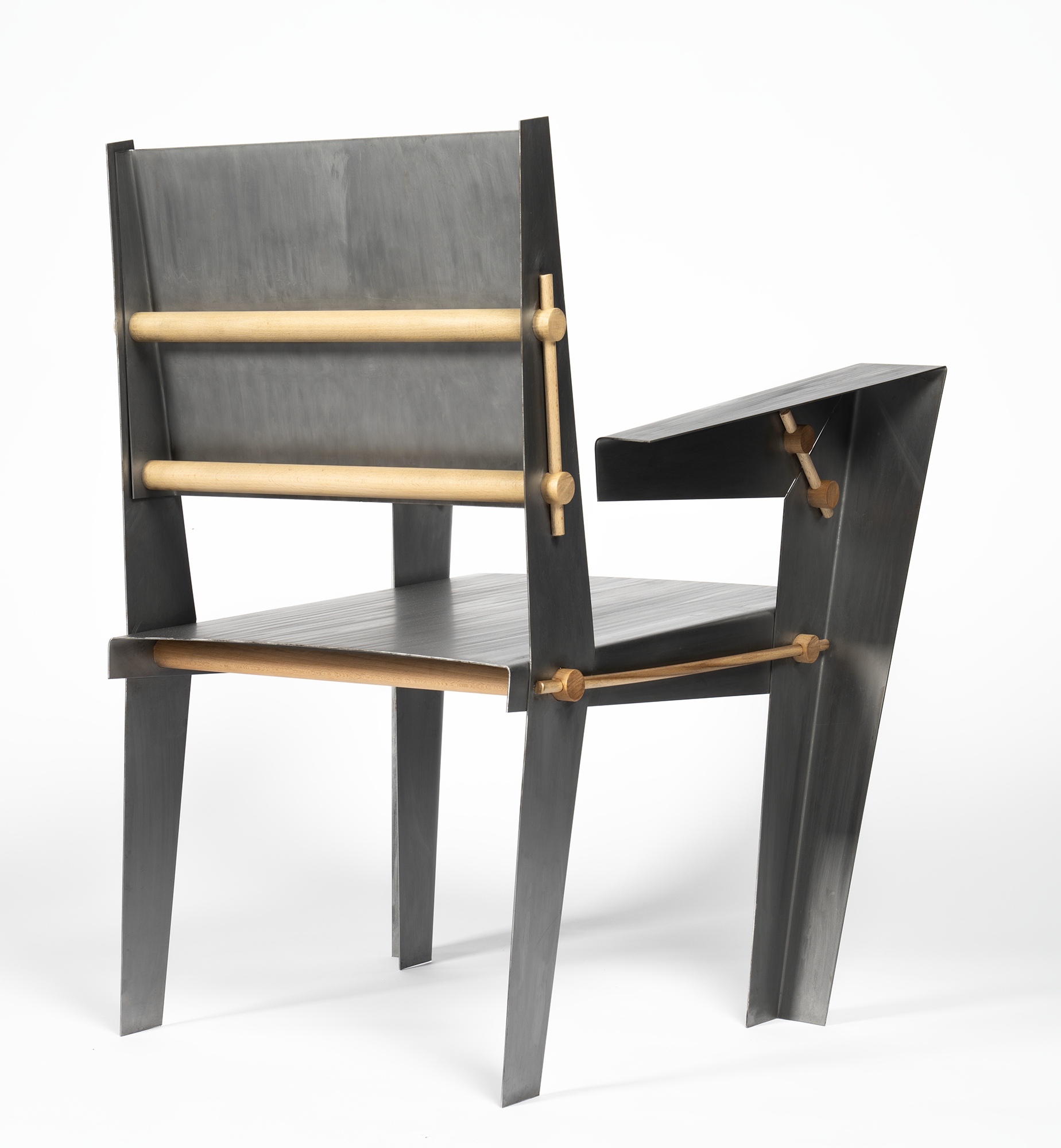
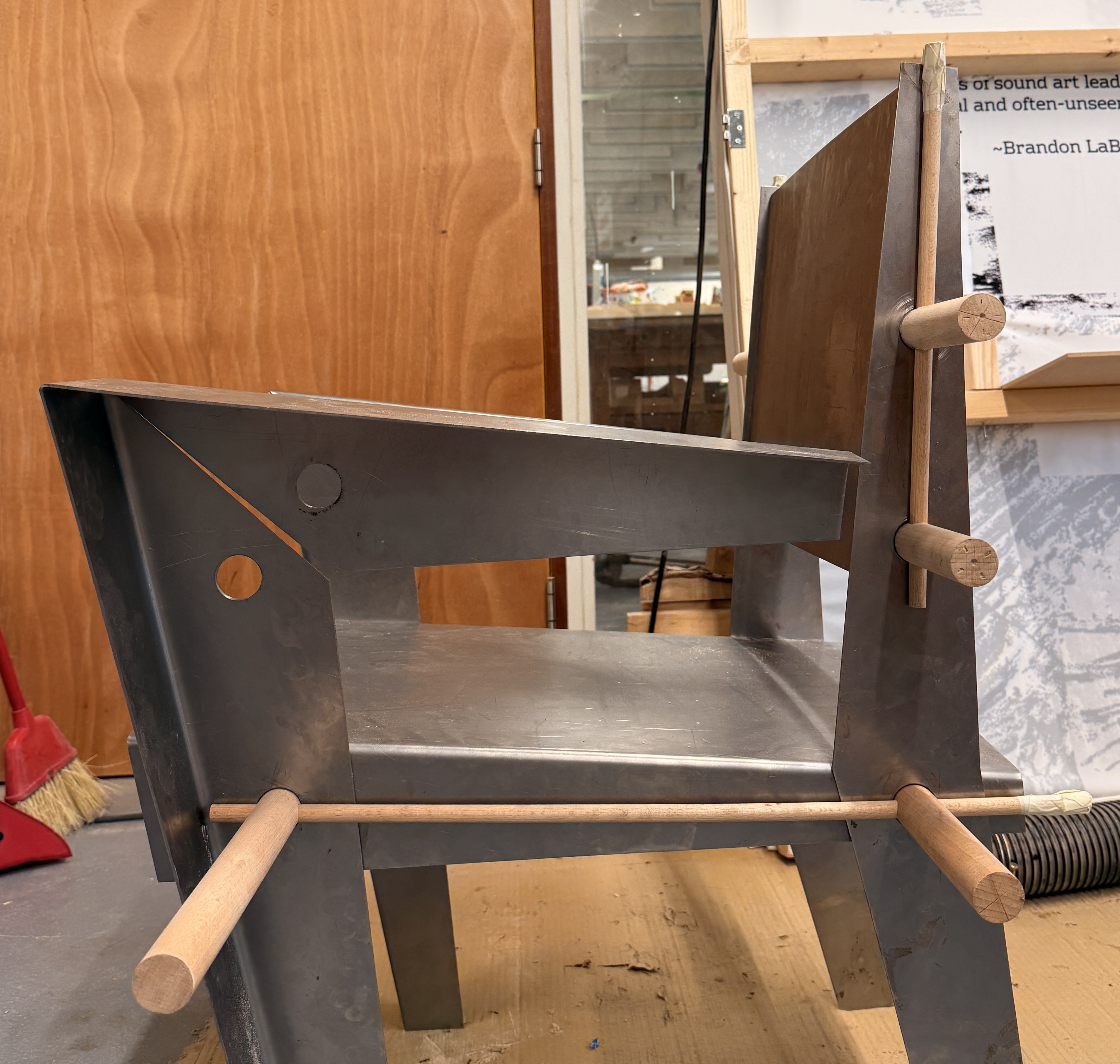
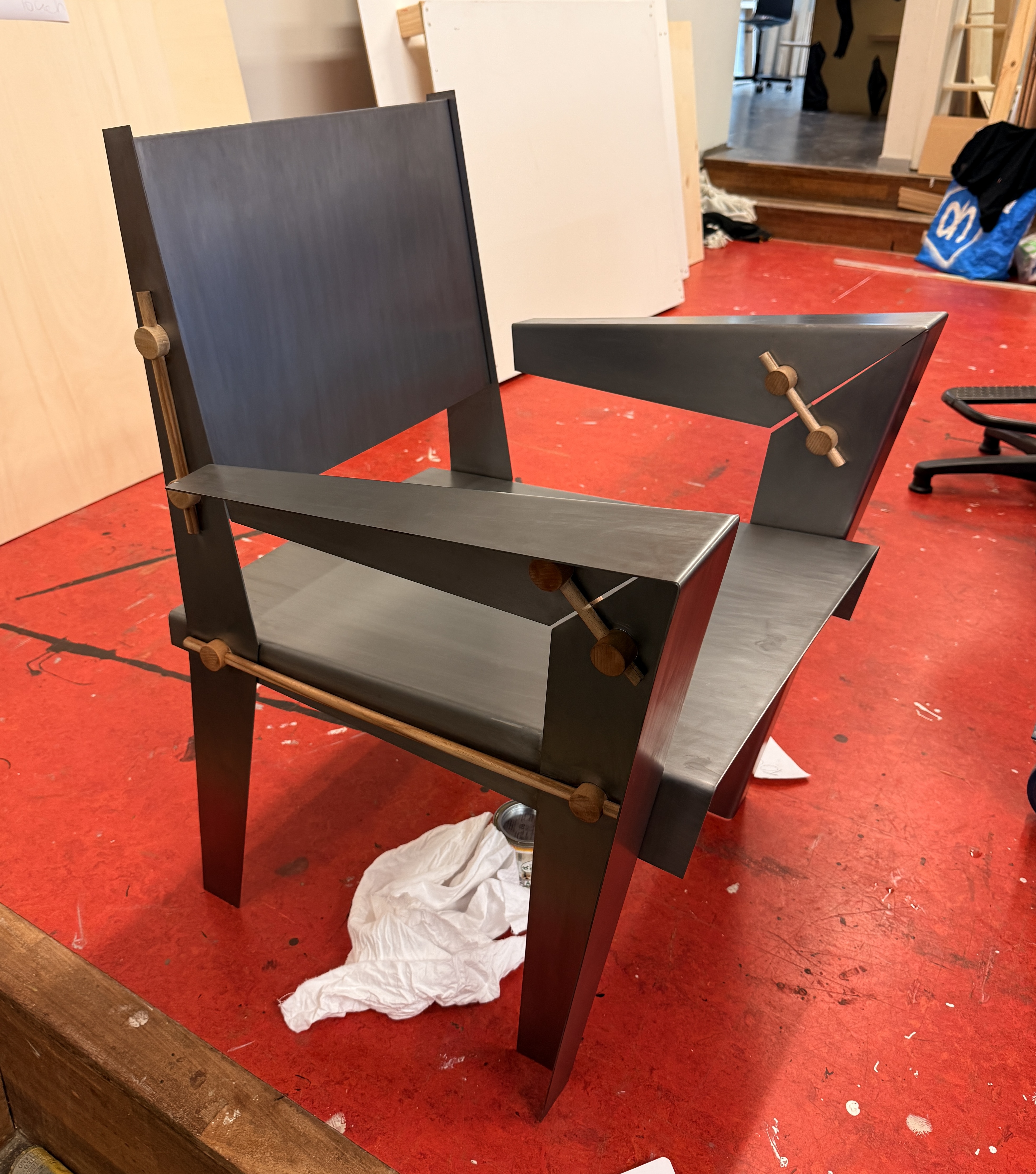
So much furniture is made from wooden parts, joint by metal fasteners. What if you turn it around? Connecting the Dots is an arm chair made from sheet metal, completely held together by wooden joinery. No screws, no glue.
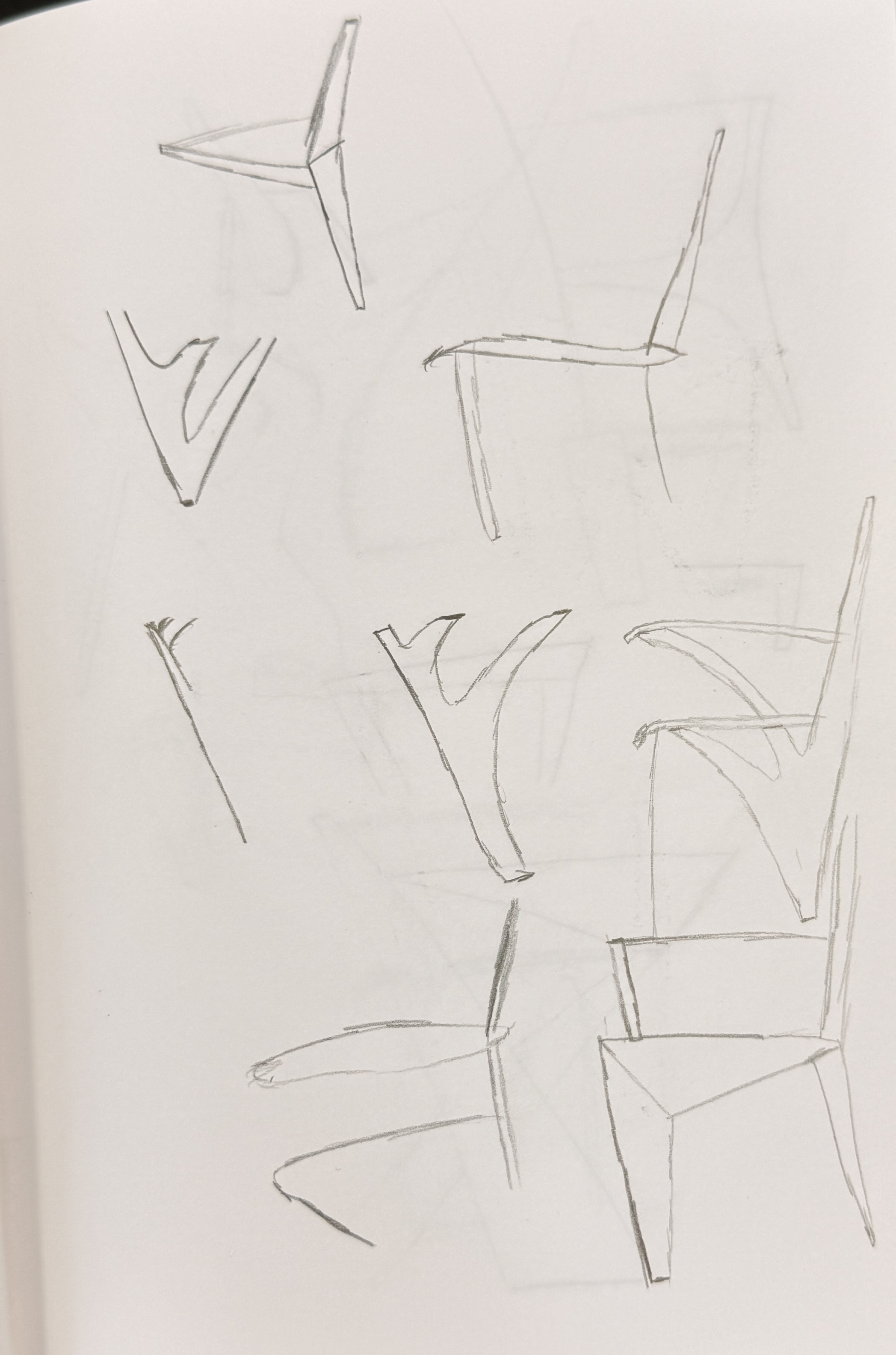
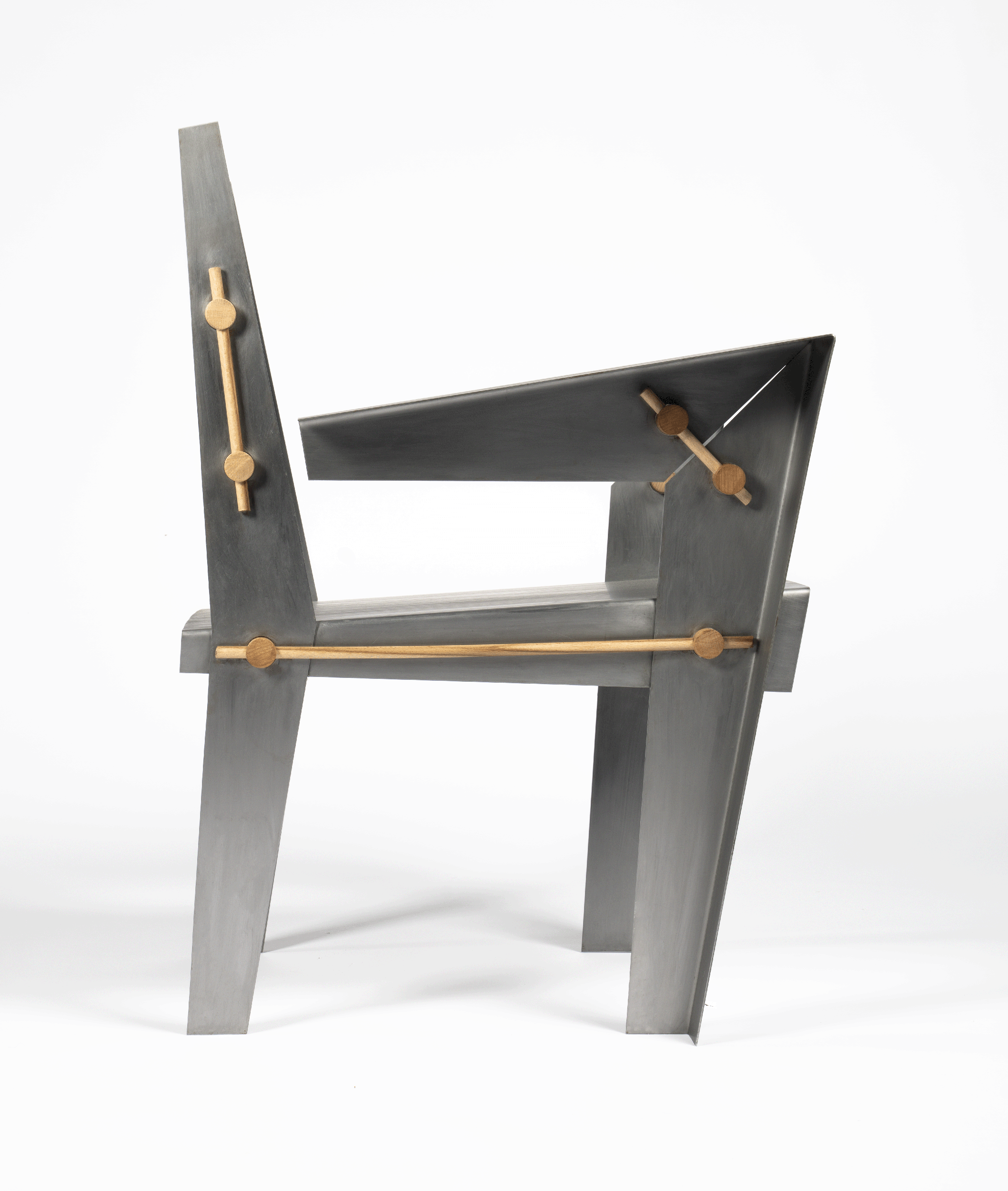 The idea of this chair started with the question: “how do I join together material in an unusual way?” In order to come up with an unusual connection system, however, I first needed to know what the usual way to connect material is. After looking at furniture I come across in my everyday life, I noticed that metal connection pieces are everywhere, which was not a total surprise. In any hard ware store there are dozens of different screws, nails, nuts and bolts. These metal fasteners are more often than not used to connect wooden pieces.
 So, if a usual way to connect material is to use metal connection pieces to joint together wooden parts, what if I design a chair using wooden connection pieces to join together metal parts?
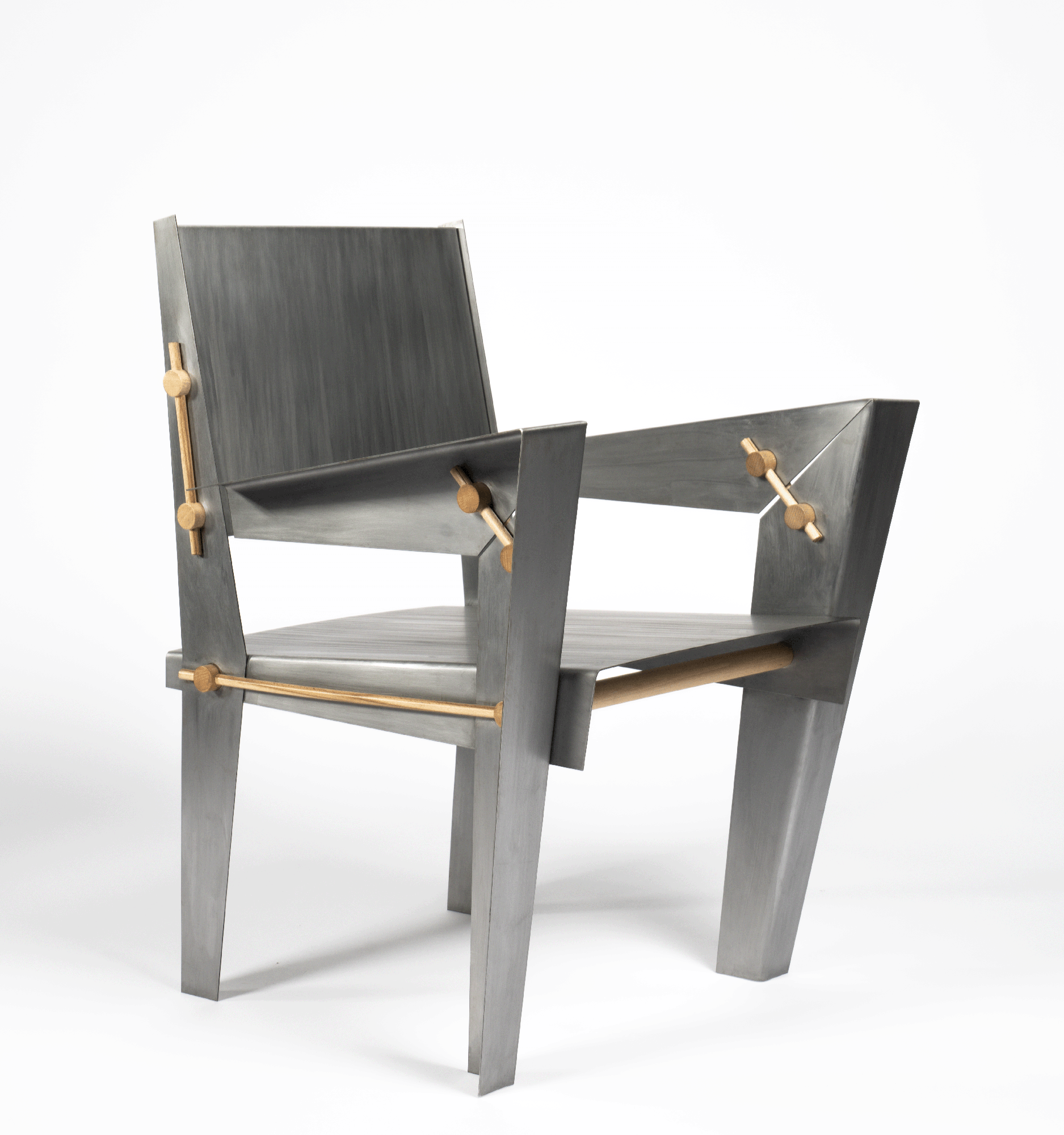
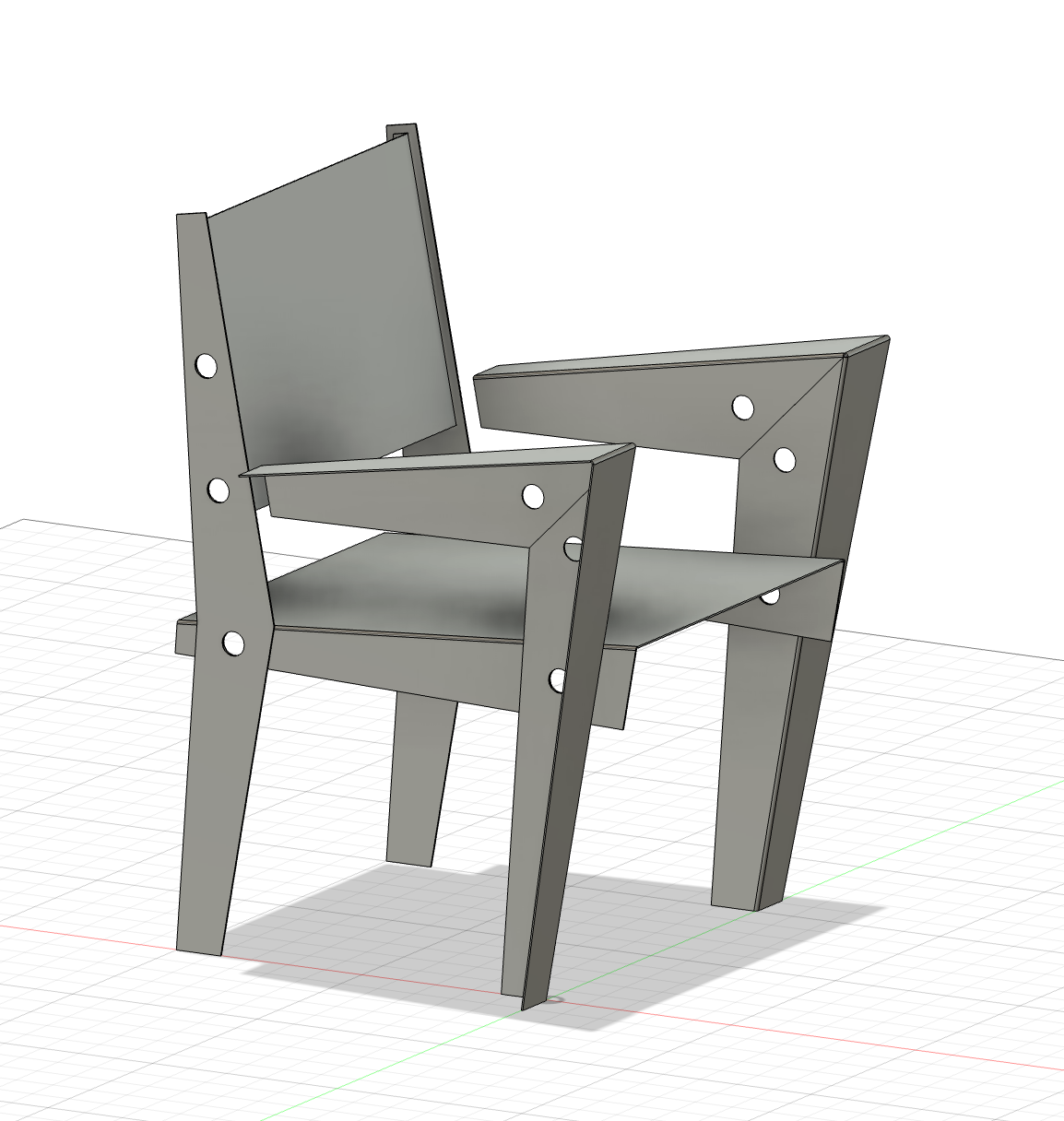
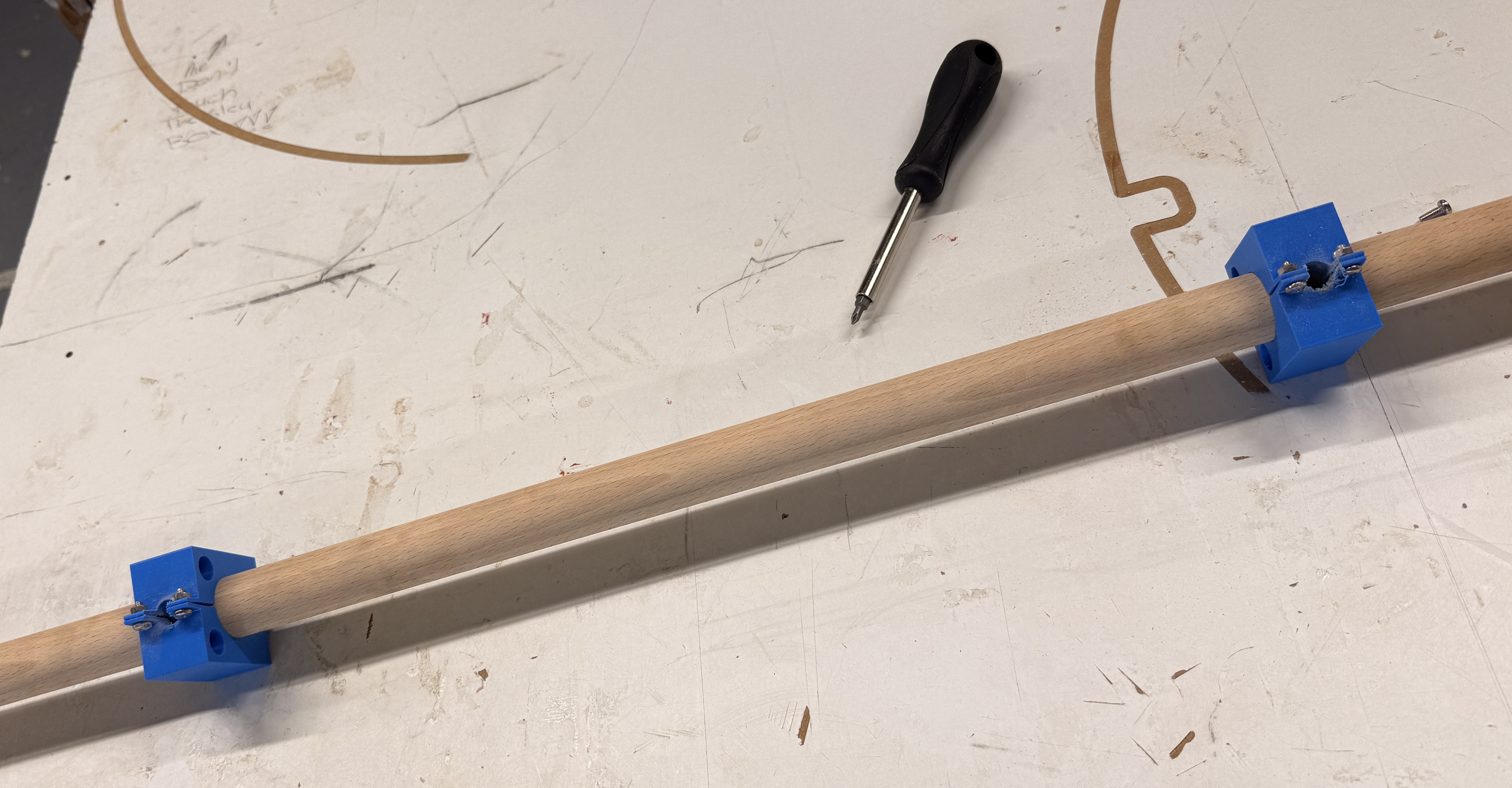
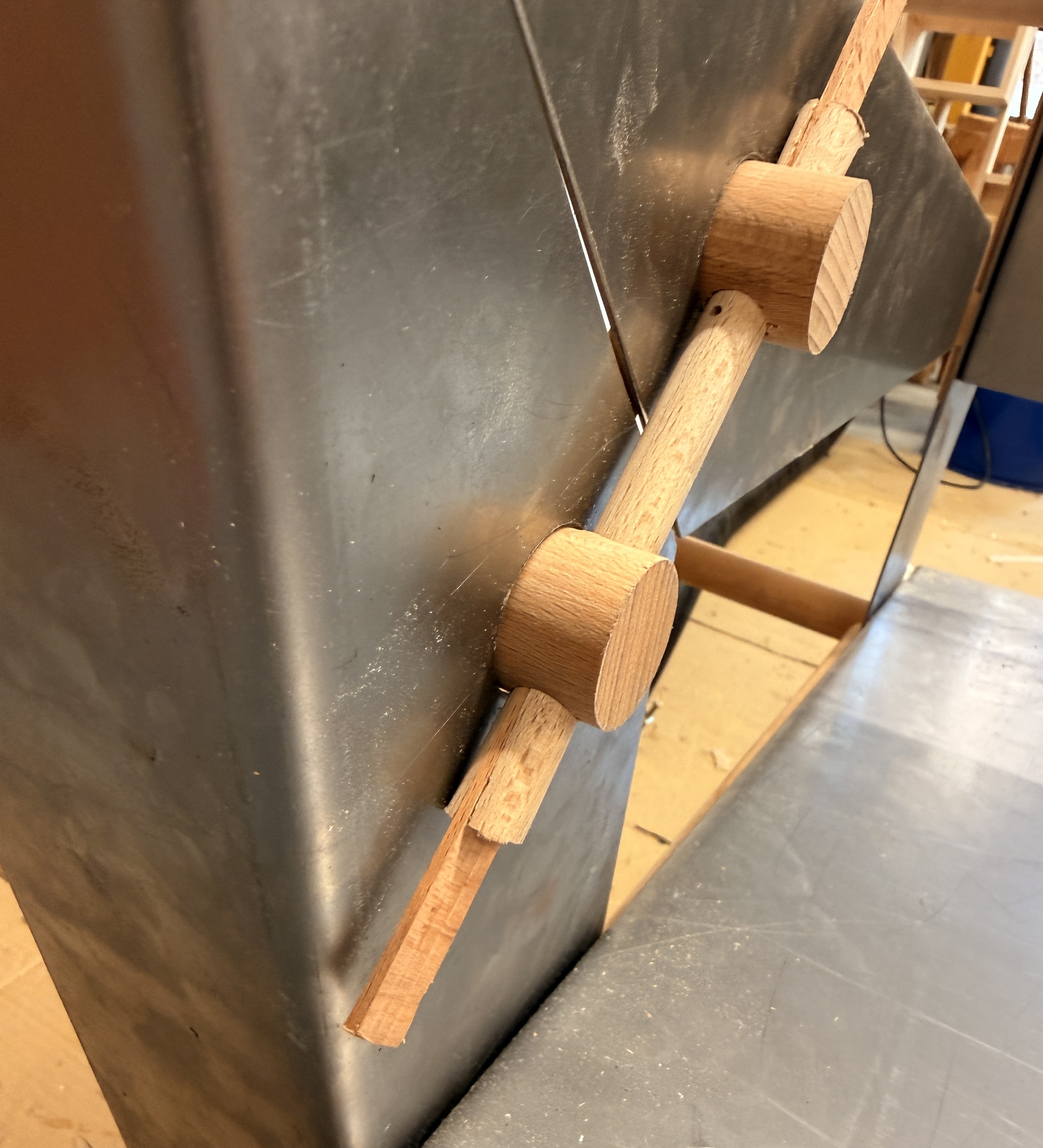
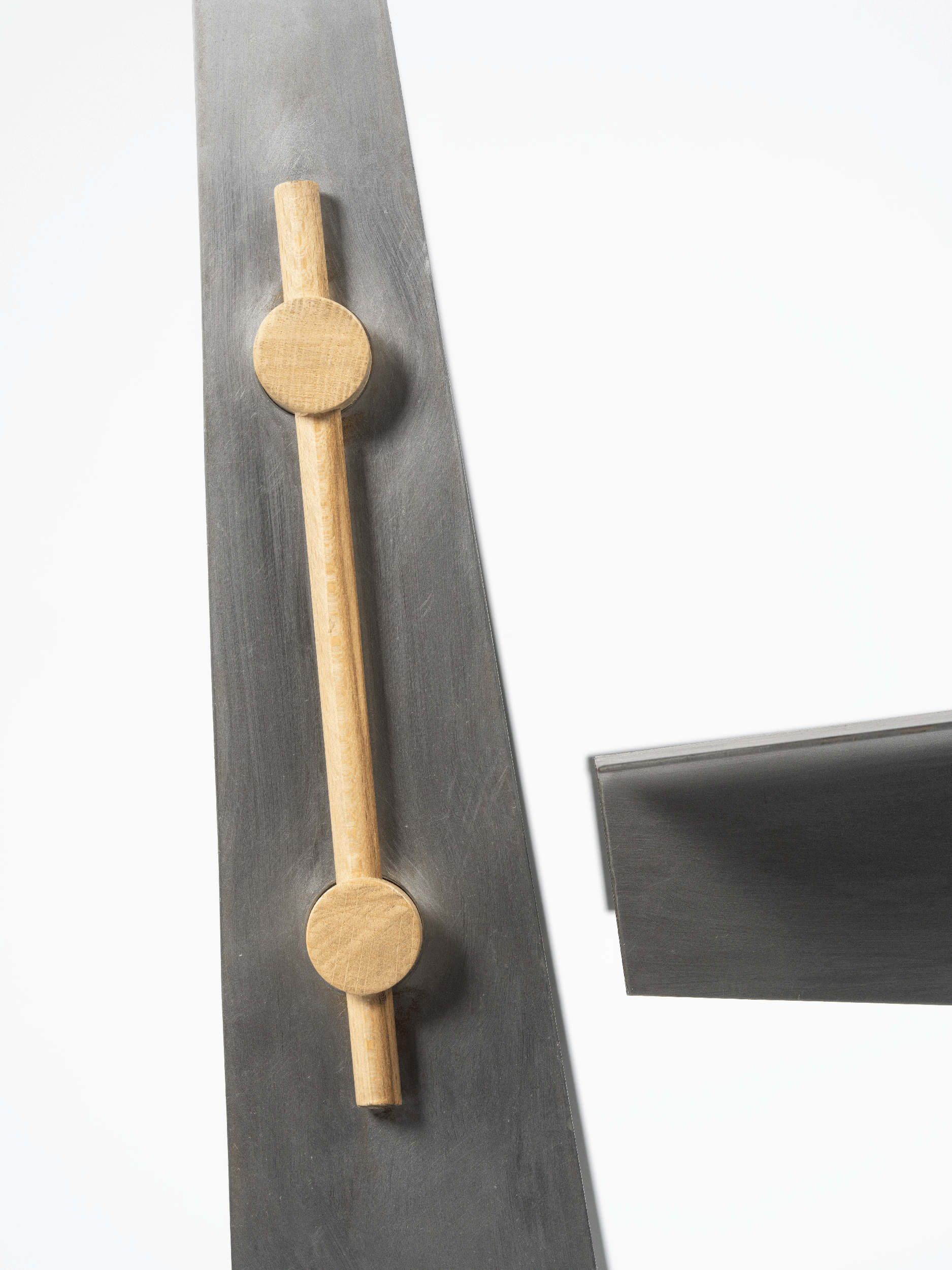 I mostly used a connection system whereby overlapping pieces of sheet metal are penetrated by wooden rods. By having the holes of the big rods slightly in line with the sheet metal, the smaller rods just barely fit. This causes the metal to push the small rod outwards, while the big rod pushes it inwards, creating a tight connection.
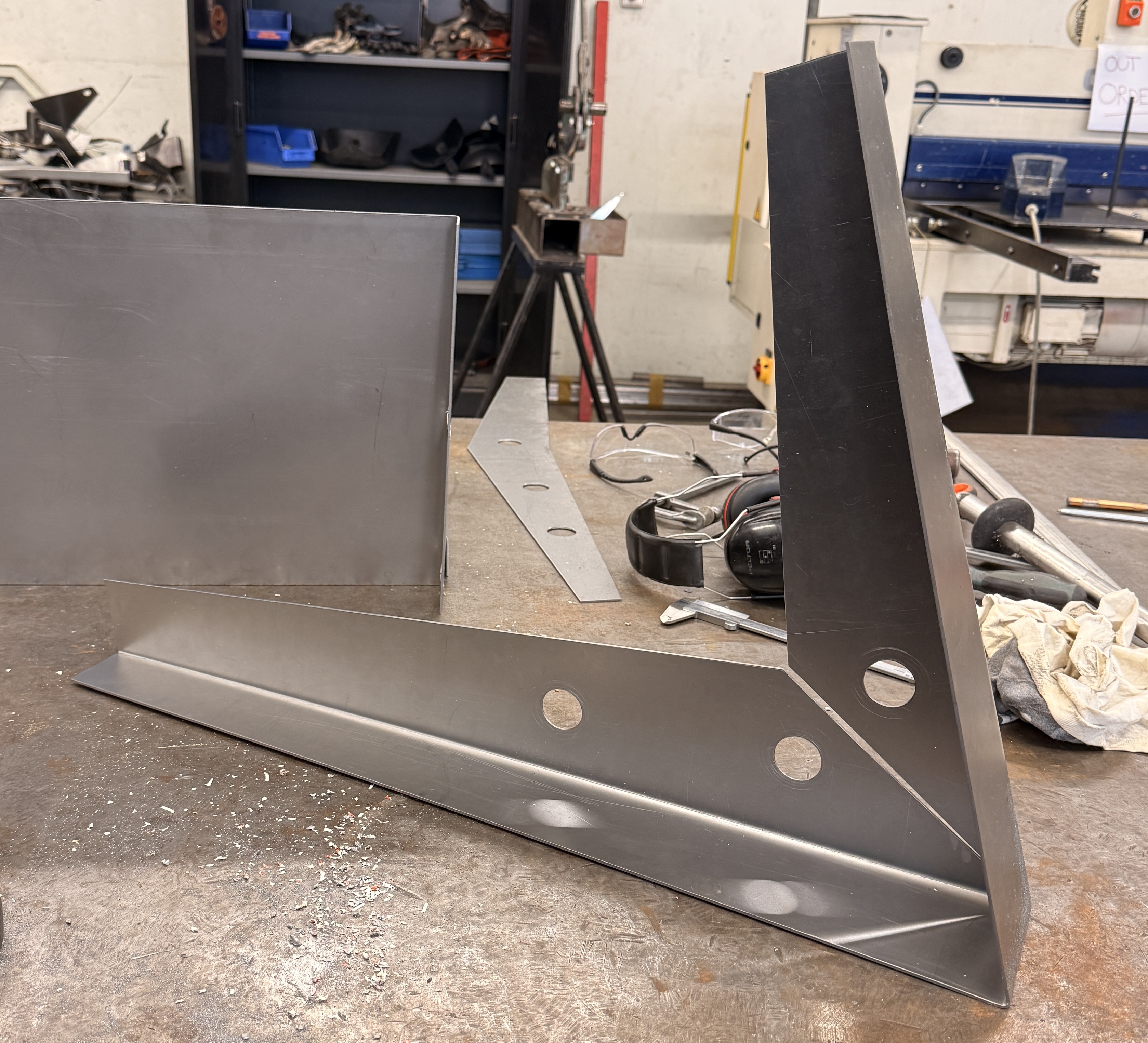
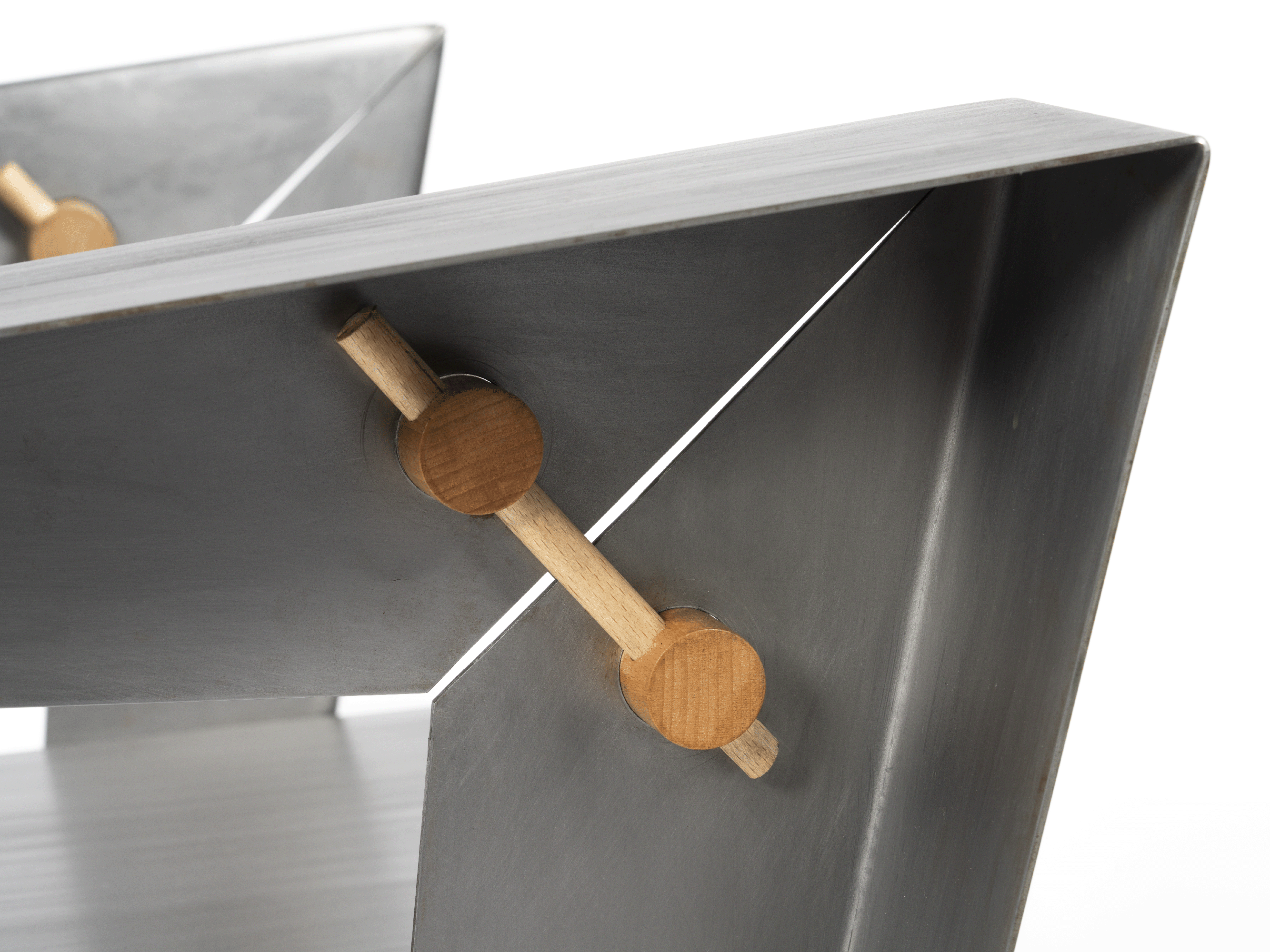 For the bend in the arm rests however, the joints have a different function. They do not need to hold together two overlapping pieces of sheet metal, but they need to decrease the size of the slit between two adjacent pieces. For this, I used a wedge joint in the smaller rods, keeping them in place relative to the bigger rod, which makes sure the distance between the two big rods, one in each side of the slit, stays constant.
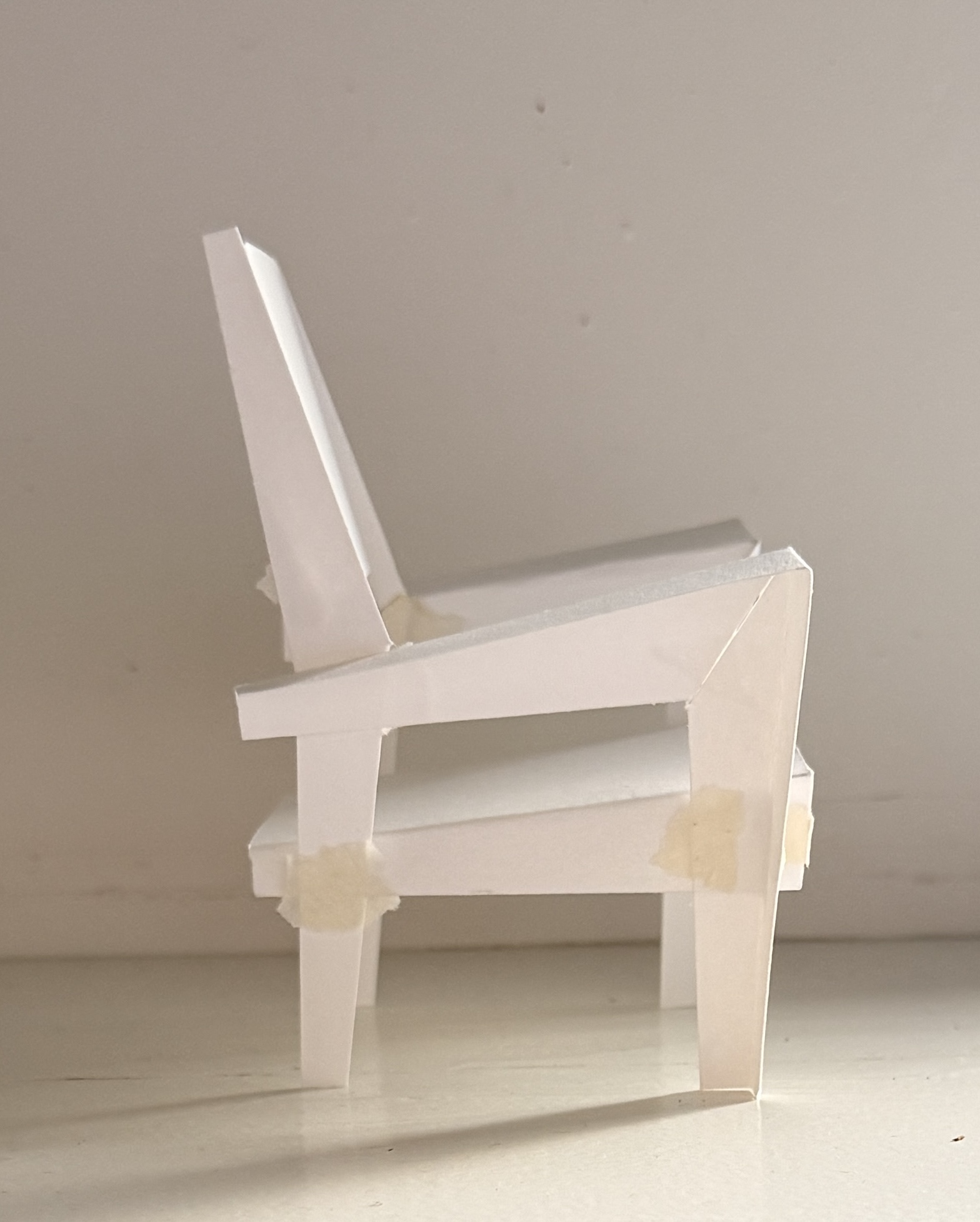
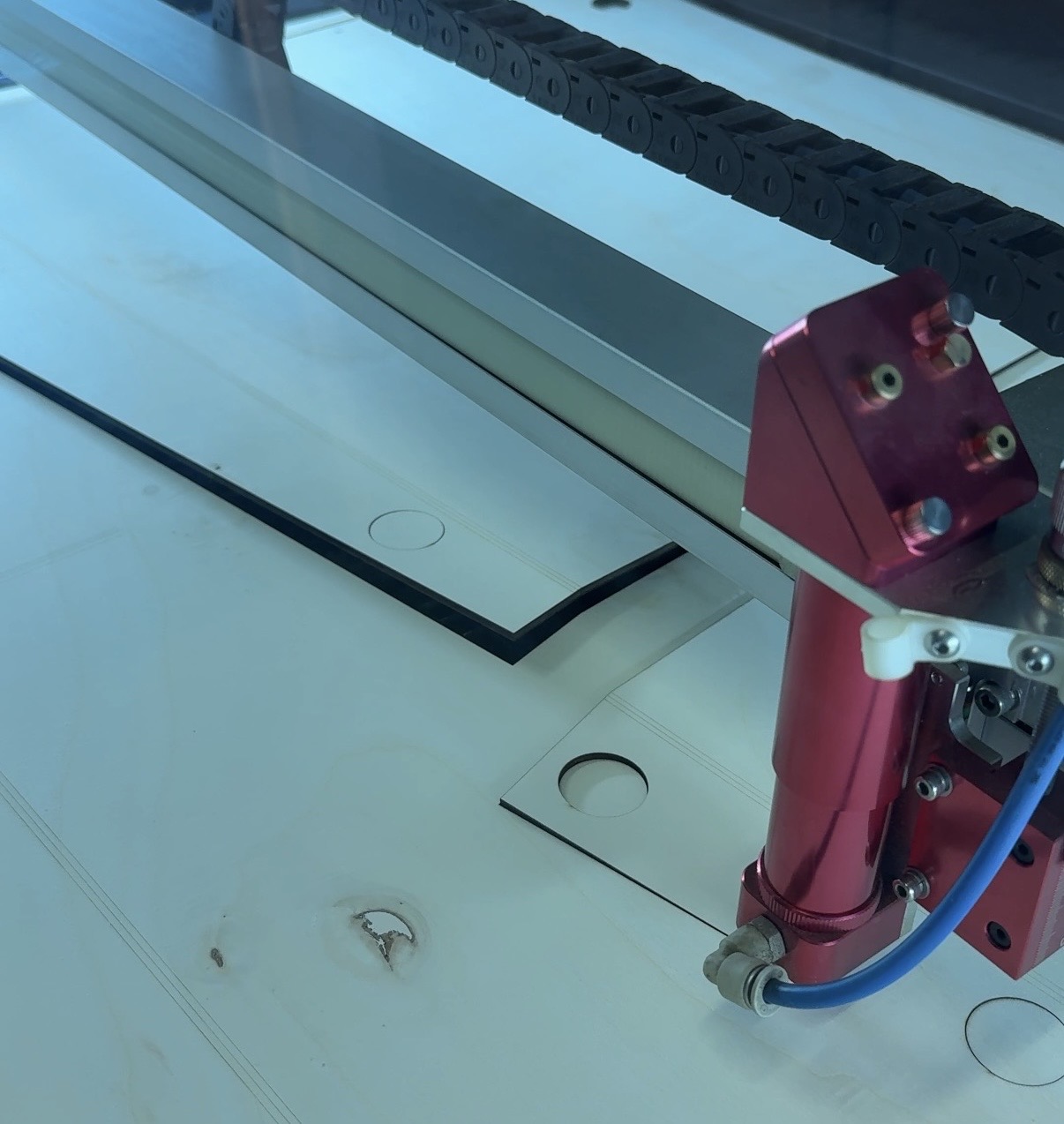
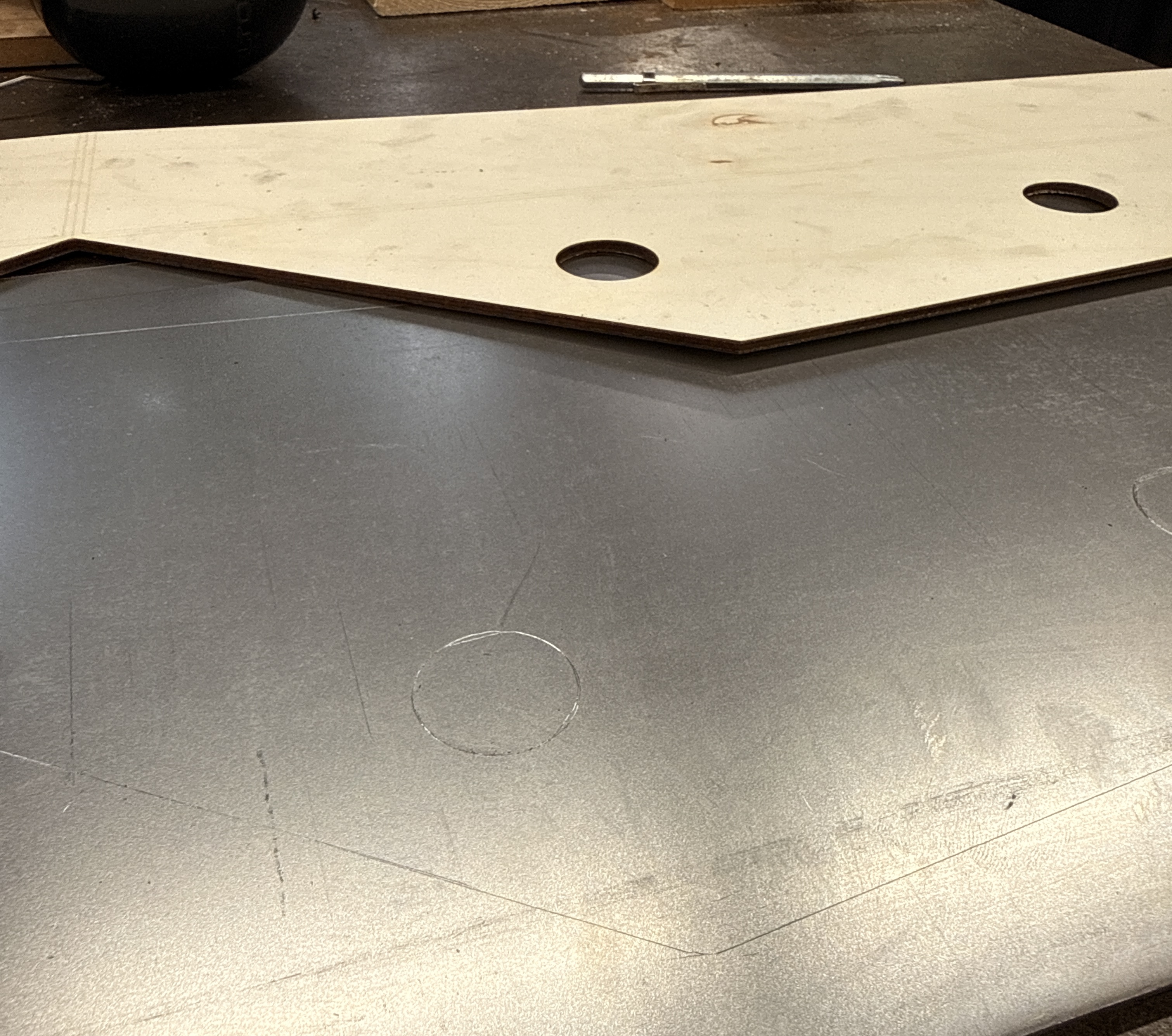
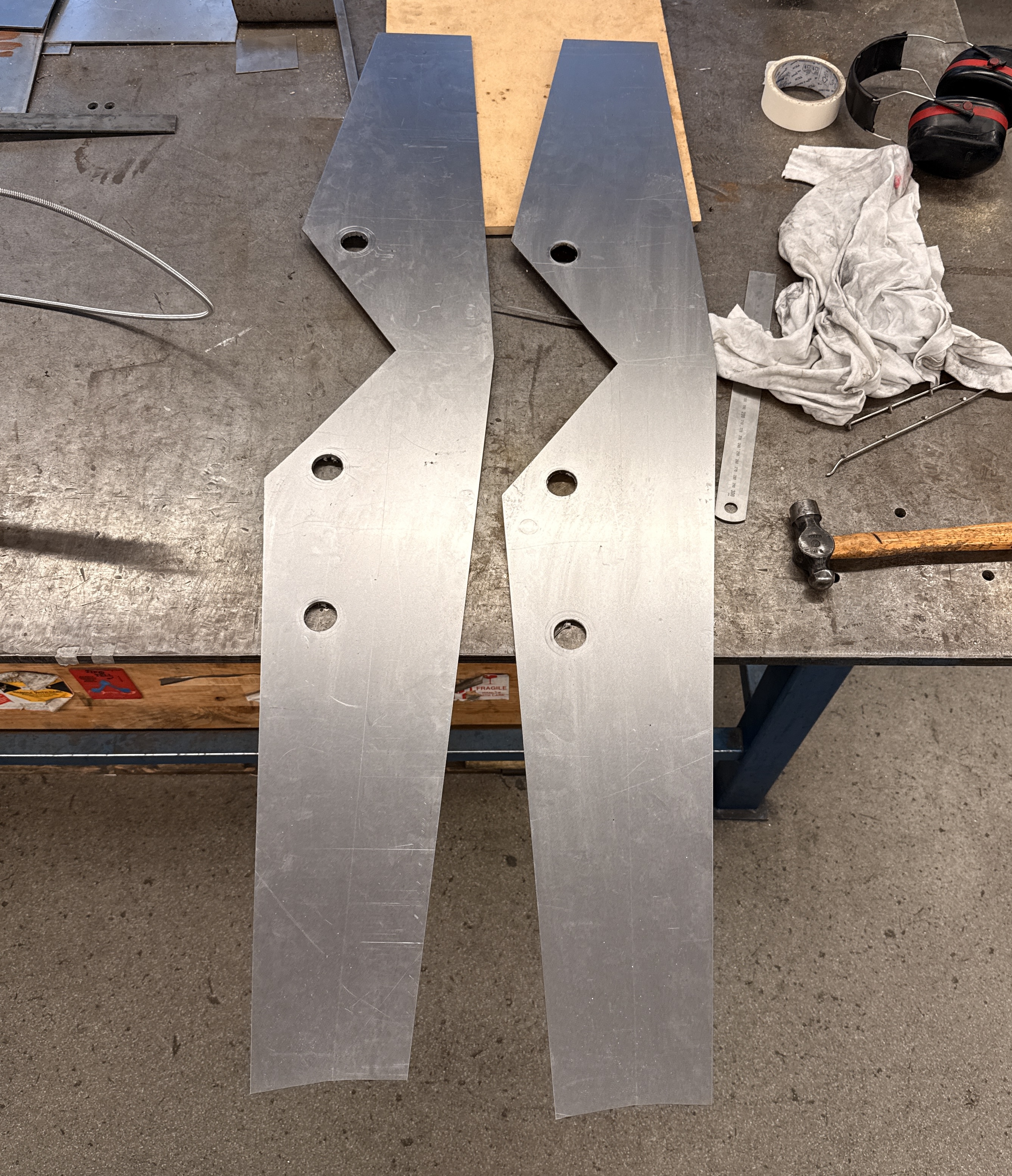
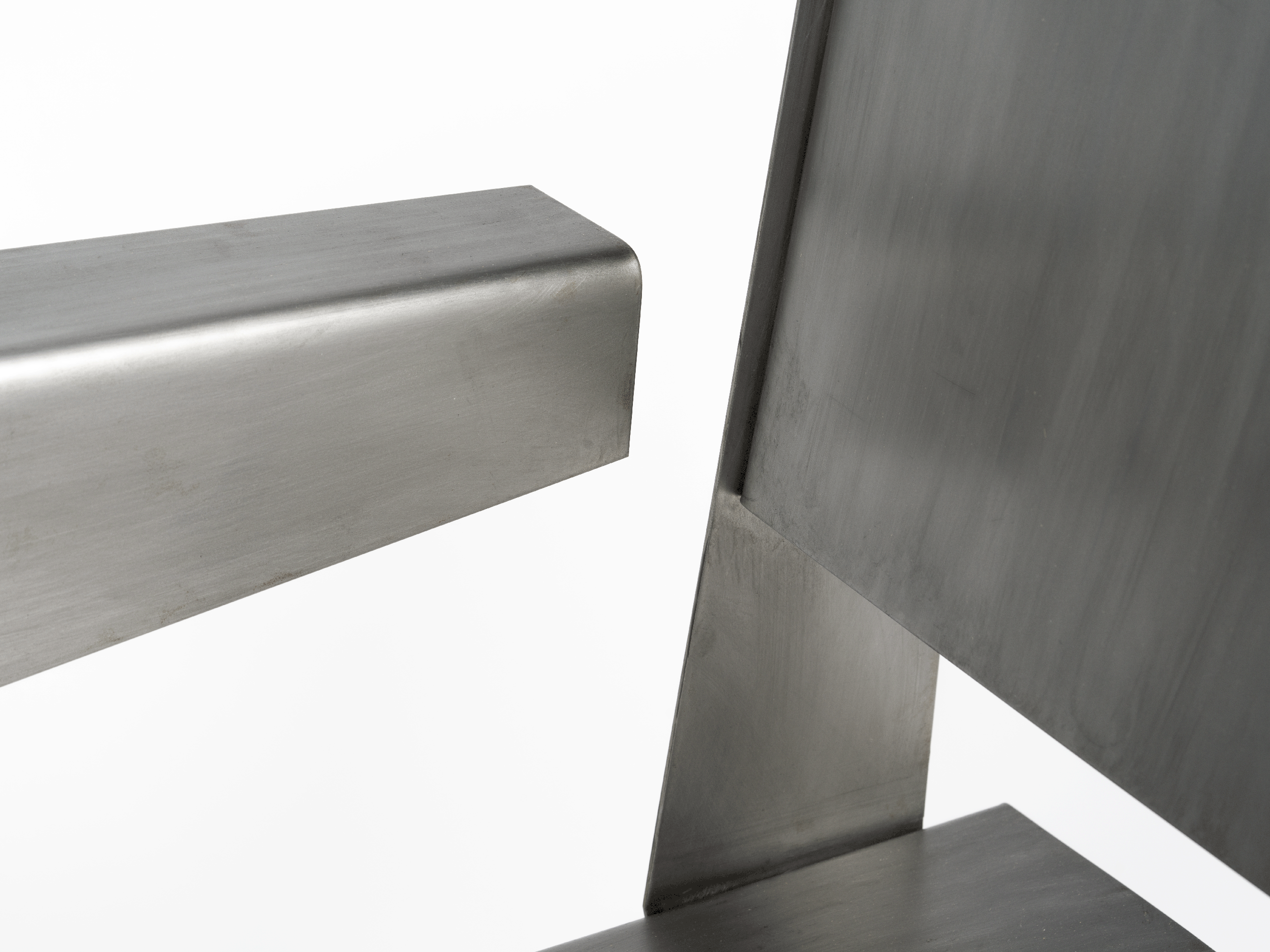 By using sheet metal, I was able to create the different metal pieces by simply cutting them and folding them to the right shape, allowing for the wooden joints to be the only connection piece necessary in this chair.